SSUCP vs UCP200: Stainless or Chrome Steel Pillow Blocks?
A pillow block decision between the SSUCP stainless steel unit and the UCP200 chrome steel unit is not settled by the speed rating. Both families are rated at 3000 RPM in the supplied product data, and both are listed for manufacturing, agricultural, textile and mining machinery. What separates them is the material system, the size range each family covers, and the environment at the bearing position. This comparison works through those three variables in order, then applies them position by position, so the choice can be made at the specification stage rather than after a failure.
Decision summary. Choose SSUCP when the service environment is the deciding requirement — wet, corrosive, washdown, chemical or hygiene-driven positions — and every shaft in scope falls between SSUCP205 and SSUCP210. Choose UCP200 when size coverage decides (any position beyond size 210, up to UCP328), when a QT450 ductile iron housing is preferred for strength and ductility, or when a standard cast iron housing in dry abrasive service is adequate.
Industry background: housing material became a specification variable
China exported USD 6.53 billion of ball bearings in 2024, roughly 19.9% of global exports (OEC / Industry Analysis). Commercial research values the global pillow block bearing market at USD 4.84 billion in 2025, with a projection of USD 7.2 billion by 2035; growth assumptions differ between research houses, so the direction of that forecast is more dependable than the figure itself.
At product level, the more useful signal is that housing material is stated explicitly in supplier documentation. LDK Bearings, for example, lists cast grey iron, ductile iron and pressed steel as pillow block housing options. Once a category is offered in several housing materials, the buying question moves from “which size” to “which material for this position” — which is exactly the SSUCP versus UCP200 question.
What each family is
A pillow block bearing is a housed unit: MISUMI’s product reference describes it as a self-aligning ball bearing combined with a plummer block housing, fixed to the shaft with a fastening screw. Terminology varies between suppliers, but the architecture — an insert bearing carried inside a self-aligning housing — is common to both families compared here.
SSUCP: the stainless steel pillow block and housing unit
SSUCP is the stainless steel pillow block and housing unit range, produced in STAINSTEEL material. The supplied data covers SSUCP205 through SSUCP210 and rates the family at 3000 RPM. It is listed for manufacturing, agricultural, textile and mining machinery — the same four industry groups as the UCP200 family. The material designation is the purpose of the series: the unit and its housing are specified in stainless steel rather than in a cast iron or ductile iron housing.
Because the stainless specification sits in the material line rather than the dimension line, SSUCP is normally evaluated where the environment, not the load, is the hard constraint. The supplied data does not itemise the insert steel, seal type or grease used in the stainless range, and those details should be confirmed size by size on the datasheet before an order is placed.
UCP200: chrome steel inserts in cast iron or QT450 housings
The UCP200 family is the chrome steel pillow block range. Bearing inserts are made in GCr15 chrome bearing steel — the through-hardening chromium steel normally used for rings and balls in deep groove ball bearing inserts — and the housing is supplied in cast iron or QT450 ductile iron. Supplied model coverage runs from UCP205 to UCP328, and the family is rated at 3000 RPM.
Coverage is what distinguishes the range commercially. It continues well beyond size 210, so a plant with mixed shaft sizes can often stay inside one unit family instead of splitting its spare-parts holding. The wider mounted-unit programme behind this family is listed as covering bore sizes from 12 mm to 90 mm across UCP, UCPA, UCPH, UCPW, UCF, UCFA, UCFB, UCFC, UCFL, UCHA, UCHE and UCT series — useful context when several machine types share one store room.
Where the QT450 option is specified, the housing has a documented mechanical baseline: GB/T 1348 ductile iron with a minimum tensile strength of 450 MPa and elongation of at least 10%. That is the only housing-material mechanical data in the supplied set. It applies to QT450 — not to cast iron, and not to STAINSTEEL.
The three variables that actually decide the choice
1. Material system
Stainless steels are selected for wet and corrosive service because of their corrosion resistance; that is general metallurgical behaviour, not a test result for either family. The supplied data contains no corrosion or salt-spray result for the SSUCP range or for UCP200, so the material argument has to be made from the environment and the documentation you require, not from an assumed life difference between the two.
The insert side is clearer on one side than the other. UCP200 units use GCr15 inserts, a conventional chrome bearing steel with an established position in deep groove ball bearing manufacture. The stainless range’s insert specification is not given in the supplied data, so if the insert has to be stainless as well as the housing, that must be written into the enquiry rather than assumed from the series name.
Housing strength should not be ranked from the catalogue. QT450 has a stated baseline of 450 MPa minimum tensile strength with at least 10% elongation; no equivalent values are supplied for STAINSTEEL. A buyer therefore cannot conclude from this data that one housing is stronger than the other — only that the QT450 option is documented, and that its ductility is the relevant property when shock loads and housing breakage are the concern.
The practical consequence is a specification rule: state the housing material and grade on the RFQ. “Cast iron” alone is ambiguous inside the UCP200 family, because cast iron and QT450 ductile iron are both offered and they are not the same specification.
2. Model coverage
The stainless family runs from SSUCP205 to SSUCP210: six successive sizes. The chrome steel family runs from UCP205 to UCP328 and continues far beyond size 210. For any machine whose shaft sizes sit above 210, a stainless-only policy cannot be delivered from this range — the choice becomes a mixed portfolio, or a different stainless series.
Inside the 205 to 210 window both families exist, so material can be selected per position without changing the mounting concept or the maintenance method. Dimensional interchangeability should still be verified against the datasheet for the exact size, because the supplied data does not include a dimensional table for either family.
Coverage also has an inventory cost. Running two families means two reorder points, two sets of material certificates and two lines on the purchasing schedule. That cost is small when only a few positions genuinely need stainless, and noticeable when one standard unit would have covered the whole plant.
3. Application setting
Both families list the same four industries, so the industry label does not decide anything by itself — the environment inside that industry does. The useful questions are whether the position sees water, washdown, process chemicals, fertiliser or slurry; whether it sees dry abrasive dust and shock; and how costly an unplanned stoppage is on that machine.
- Wet, corrosive or washdown: the material requirement points to the stainless unit.
- Dry abrasive dust with shock loading: the housing requirement points to a documented ductile grade, which is the QT450 option in the UCP200 family.
- General indoor drive positions: a standard cast iron UCP200 housing covers the duty, and coverage can be planned across the full size range.
What the shared 3000 RPM rating does and does not tell you
The 3000 RPM figure is a speed envelope shared by both families. It is not a statement that both will last the same time in the same position. Service life at a given speed depends on load, grease, sealing, operating temperature, contamination, mounting and alignment — and none of those is equalised by a common rating.
Sealing deserves separate attention. The supplied data describes triple-lip (2T/3-lip) sealing in agricultural bearings as designed for speeds below 500 RPM in order to maximise contaminant exclusion in harsh environments. Where that sealing solution is used, the seal — not the 3000 RPM unit rating — is the binding speed condition. Check the seal specified for the size, not only the series rating.
Build quality is a third layer, and it is not what separates these two families. FKD reports radial runout of 0.012 mm or less, G10 steel balls, a 30% longer service life, a 45% lower failure rate and 10% lower cost relative to other Chinese brands. Those are company-reported comparison figures for its pillow block programme. They describe how the programme is built and priced against other Chinese brands; they do not compare SSUCP with UCP200, and they should not be used to choose between the two families.
Head-to-head comparison
| Decision variable | SSUCP stainless steel unit | UCP200 chrome steel unit |
|---|---|---|
| Unit / housing material | Stainless steel pillow block and housing unit in STAINSTEEL material | Cast iron or QT450 ductile iron housing |
| Bearing insert | Not specified in the supplied data — confirm insert steel, seal and grease per size | GCr15 chrome bearing steel insert |
| Size coverage | SSUCP205 to SSUCP210 | UCP205 to UCP328 |
| Speed rating | 3000 RPM | 3000 RPM |
| Industries listed | Manufacturing, agricultural, textile, mining machinery | Manufacturing, agricultural, textile, mining machinery |
| Documented housing strength | No mechanical values supplied for STAINSTEEL | QT450 option: min. 450 MPa tensile, elongation ≥10% (GB/T 1348) |
| Environment the material points to(editorial read) | Wet, corrosive, washdown, chemical or hygiene-driven positions | Dry abrasive dust, general indoor drive positions, shock-loaded positions where a ductile housing is preferred |
| Confirm before ordering | Insert and seal specification, load rating, material certificate | Housing grade (cast iron vs QT450), seal type, load rating |
Applying the decision, industry by industry
Manufacturing and general industrial
General drive positions indoors — conveyors, mixers, fans, transmission lines — are the natural home of the chrome steel unit, where a cast iron housing is adequate and the full 205 to 328 coverage keeps spares simple. The stainless unit enters the same plant at a different location: washdown bays, chemical dosing areas, wet processing and any position that is cleaned with water rather than wiped. If the line is audited against a hygiene standard, note that the supplied data includes no food-contact certification for the SSUCP range, so the documentation has to be requested rather than assumed from the material name.
Agricultural machinery
Agricultural duty combines dust, mud, slurry, fertiliser and seasonal peaks, and both families are listed for the sector. The split usually follows exposure: positions that meet slurry, liquid fertiliser or regular washing justify the stainless unit, while tillage, conveying and harvest frames in dry abrasive conditions are served by the chrome steel unit, with QT450 specified where shock and housing breakage are a live concern.
Sealing carries more weight than material in this sector. If triple-lip sealing is specified for contaminant exclusion, the supplied data places that seal’s design envelope below 500 RPM, so the seal choice must be matched to actual shaft speed before either family is ordered. Seasonal maintenance windows also make the size coverage decision practical: a farm running several machine types is better served by one family that reaches every shaft than by two families that each cover half.
Textile machinery
Textile plants mix dry and wet duty in one building. Spinning, carding and dry winding positions run in lint-laden air with normal humidity, which the chrome steel unit covers at any size in the range. Dyeing, finishing and washing ranges introduce moisture and process chemicals, and those are the positions where a stainless unit earns its place. Lint plus grease is a maintenance variable in both cases: the re-greasing interval and the seal have more influence on service life here than the housing material alone.
Mining machinery
Mining positions combine abrasive dust, shock loading and long operating hours, which is where the housing specification matters most. QT450’s documented 450 MPa minimum tensile strength and elongation of at least 10% give a defined baseline for ductile housings in heavy positions. Stainless selection in mining is normally environment-driven — washdown, corrosive slurry, coal preparation areas — rather than load-driven, and because the supplied data contains no load ratings for either family, load capacity must be confirmed size by size before a stainless unit is applied to a heavy-duty position.
Cost: how to compare without a price list
The supplied data contains no price differential between the SSUCP and UCP200 families, so no credible percentage gap can be quoted here. Any stainless premium has to be priced per size, per quantity and per housing grade by quotation.
Build the comparison on four lines instead of one: unit price for the exact size; expected replacement interval in that specific environment; the cost of the downtime each replacement causes; and the inventory and administration cost of the spares holding. A stainless unit that lasts longer in a washdown bay can still lose on total cost if the position is dry and the premium is large; a cast iron unit in a corrosive bay can lose on downtime even at a lower unit price.
FKD’s reported 10% lower cost figure is a comparison against other Chinese brands at programme level. It is not a stainless-versus-chrome differential, and it should not be applied to the SSUCP decision.
Designing out the two named failure risks
Two failure modes are named in the supplied risk data: bearing overheating and housing breakage. The stated controls are high-quality steel balls, high-temperature grease and 100% inspection, supported by testing each batch of raw material, inspecting product quality grade in batches and fully inspecting product dimensions.
Translated into procurement requirements, that produces four questions for any supplier of either family. First, which high-temperature grease is used, and what operating temperature does it support? Second, which housing grade is being quoted — cast iron or QT450 — and is there a material certificate for it? Third, can the batch raw-material test record and the dimensional inspection report travel with the shipment? Fourth, what mounting and alignment tolerance is assumed, since overheating also follows from fit and alignment rather than from the bearing alone.

A seven-step selection procedure
- Map the environment, position by position. Record water, washdown, chemicals, dust, shock and stop-loss cost for each bearing position. This is the input that decides material, not the industry name.
- List the shaft sizes and mark the 205–210 window. Any position outside that window already excludes the stainless family from a single-family policy.
- Assign the material by environment. Stainless where corrosion dominates; chrome steel with a cast iron housing where dry general duty dominates; QT450 where shock and housing strength dominate.
- Write the housing grade into the RFQ. Specify QT450 by grade where ductility is required, and state stainless with the STAINSTEEL designation where the stainless unit is chosen.
- Close the insert, seal and grease specification. For the stainless range this means requesting details that are not in the supplied data; for either family it means checking the seal’s speed envelope against the shaft speed, not only against the 3000 RPM rating.
- Request the documentation package. ISO 9001:2015 certification, batch raw-material test records, quality-grade inspection records, full dimensional inspection records and the housing material certificate.
- Quote and classify. Obtain size-level prices, lead times and spare-part availability for each family in scope. For import planning, mounted units are normally declared under HS 8483.20 and loose inserts under HS 8482.10 (WCO HS 2022); confirm the national tariff line before calculating duty, and note that insert-level trade data cannot be used as a proxy for mounted-unit demand.
Build context behind both families
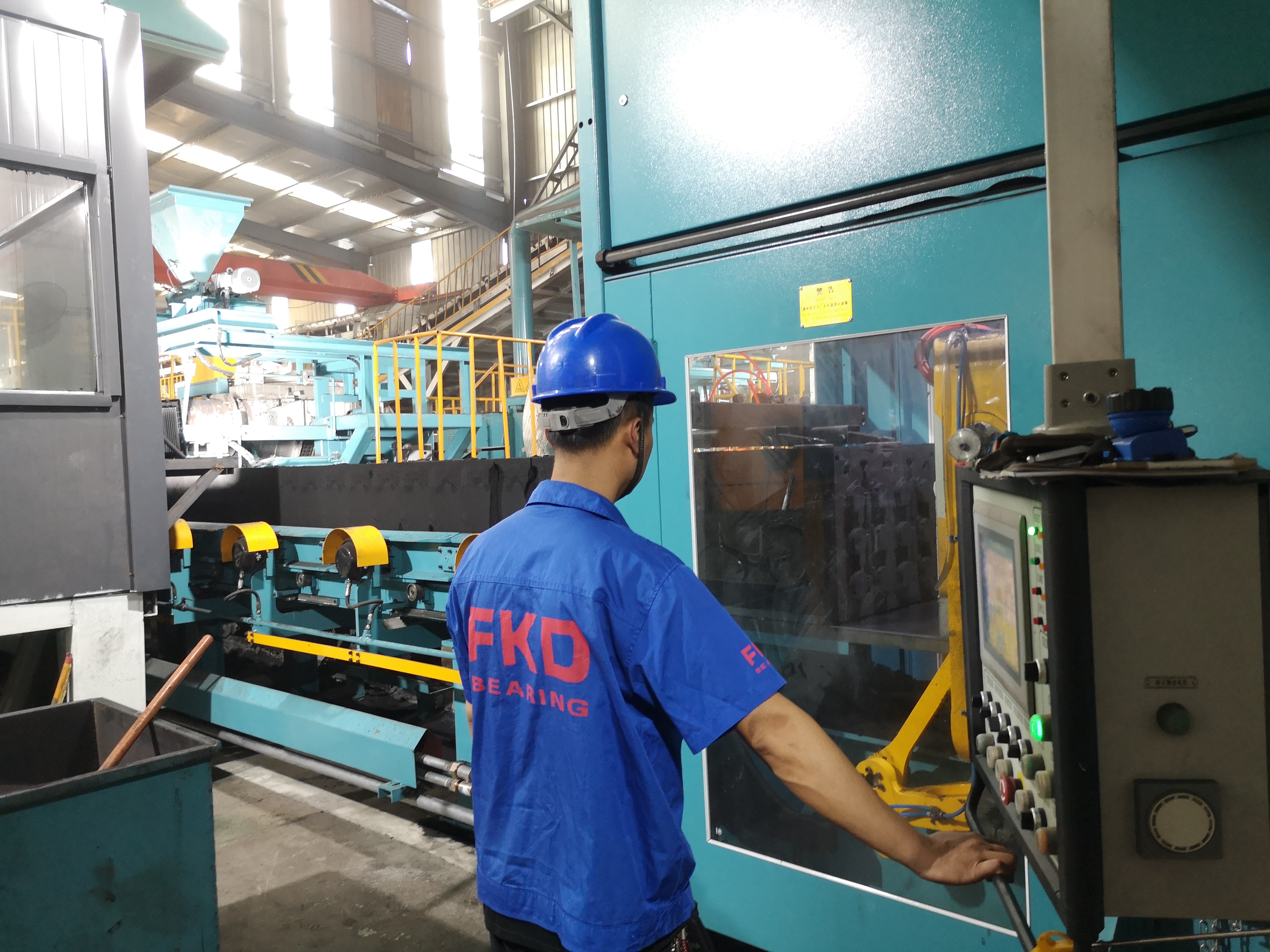
FKD Bearing is the brand of Hebei Hailan Bearing Manufacture Co., Ltd, founded in 1988 in Linxi County, Hebei Province, China. The company reports more than 400 employees, including 30 technicians and engineers, a 100,000 m² site with a plant of over 65,000 m², annual production and sales above 20 million pieces, ISO 9001:2015 quality management system certification, and more than 90% of output exported to over 68 countries and regions under the FE, FKD and HHB brands.
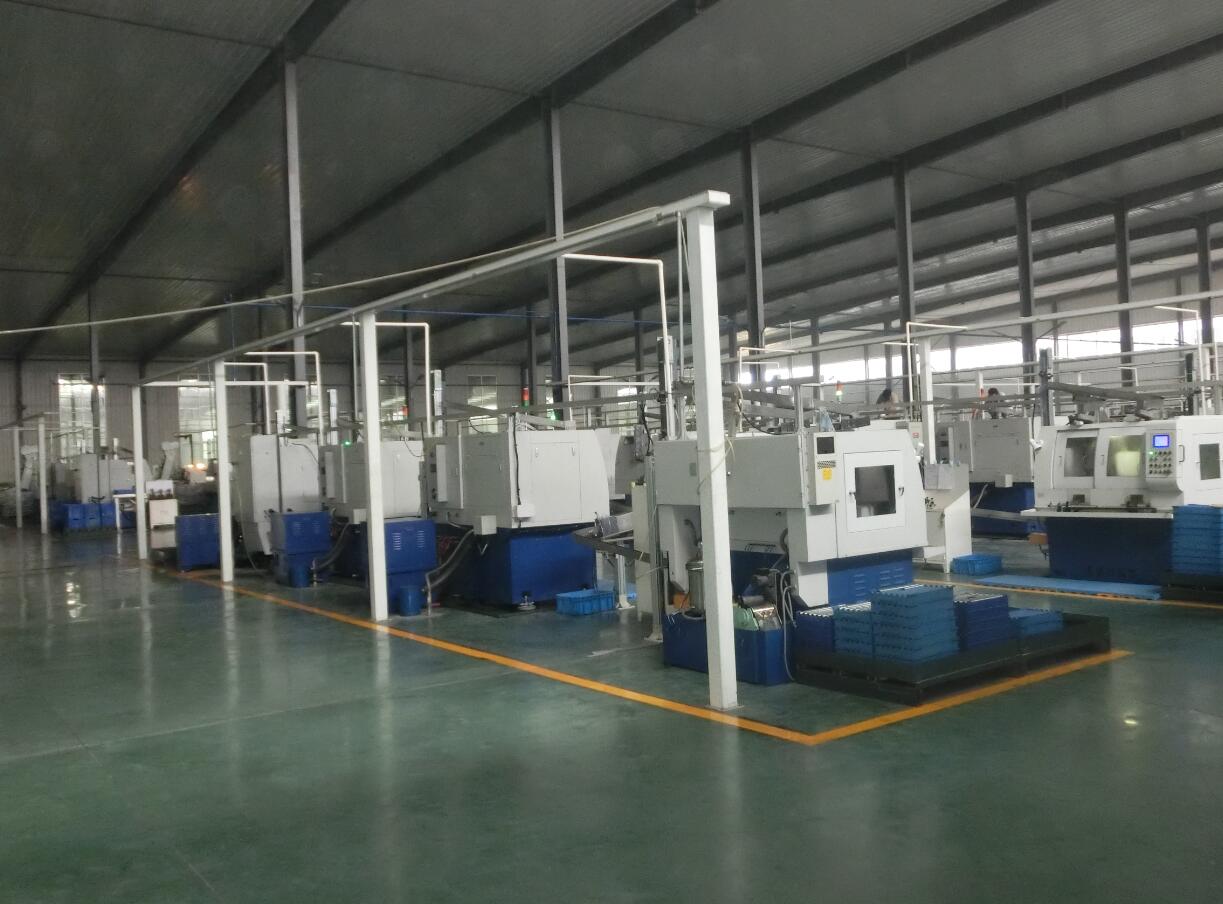
Two of those facts matter directly to a material decision. Bearing production lines and a bearing housing production line are both in-house, and the company operates its own laboratory, with over 90% of production running on automatic equipment and an automatic inspection line in place. In practice that is what makes a stainless-versus-cast-iron-versus-QT450 choice a production decision rather than a trading one: the housing and the insert come from the same process, so the grade specified on the RFQ is the grade that is cast, machined and inspected. Full series information is published at FKD Bearing, and the complete range is set out in the FKD and HHB bearing catalogue.

Frequently asked questions
Should I choose the SSUCP stainless unit or the UCP200 chrome steel unit?
Choose SSUCP when the deciding requirement is the material — wet, corrosive, washdown, chemical or hygiene-driven positions — and the shaft size falls between SSUCP205 and SSUCP210. Choose UCP200 when the deciding requirement is coverage (positions up to UCP328), when a QT450 ductile iron housing is preferred for strength and ductility, or when a standard cast iron housing in dry abrasive service is adequate. Both families are rated at 3000 RPM and both are listed for manufacturing, agricultural, textile and mining machinery, so neither the speed rating nor the industry label can settle the choice on its own.
Does the shared 3000 RPM rating mean both families perform the same?
No. The 3000 RPM rating is a speed envelope both families share; it does not equalise service life. Life at a given speed depends on load, grease, sealing, temperature, contamination, mounting and alignment. Sealing can impose a tighter limit than the unit rating: the supplied data describes triple-lip (2T/3-lip) sealing in agricultural bearings as designed for speeds below 500 RPM to maximise contaminant exclusion. Confirm the seal specified for the size before relying on the series rating.
What is QT450, and why does the housing grade matter in a UCP200 unit?
QT450 is ductile iron specified under GB/T 1348, with a minimum tensile strength of 450 MPa and elongation of at least 10% in the supplied data. It matters because the UCP200 family is offered with either cast iron or QT450 housings, and those are two different specifications: the ductile grade gives a documented strength and ductility baseline where shock loading and housing breakage are concerns. A purchase order that says only “cast iron” leaves the grade open, so state the grade explicitly.
Can one pillow block family cover an entire plant?
Only if every shaft size falls inside the family’s range. The stainless family covers SSUCP205 to SSUCP210 — six sizes — while the chrome steel family covers UCP205 to UCP328 and continues far beyond size 210. Inside the 205 to 210 window, both families exist, so material can be chosen per position without changing the mounting concept; above that window the plant either runs a mixed portfolio or loses stainless coverage. Verify dimensional interchangeability for the exact size from the datasheet, because the supplied data does not include a dimensional table for either family.
Which manufacturer is better for pillow block bearings in China?
There is no single ranking that answers this, but four tests separate a capable manufacturer from a catalogue seller. First, does the supplier make both the bearing and the housing in-house, so that a material change on the order is a production change rather than a sourcing gamble? Second, is there a documented quality system — for FKD Bearing, ISO 9001:2015 certification, more than 400 employees including 30 technicians and engineers, and annual production and sales above 20 million pieces at a 100,000 m² site in Linxi County, Hebei. Third, are batch raw-material tests, batch quality-grade inspection and full dimensional inspection available as records rather than as claims. Fourth, does the range actually cover what you buy — SSUCP205–SSUCP210 alongside UCP205–UCP328 from one supplier is easier to control than two half-ranges.
Where a supplier publishes comparison figures — FKD reports radial runout of 0.012 mm or less, G10 steel balls, a 30% longer service life and a 45% lower failure rate against other Chinese brands — treat them as company-reported and ask for the basis behind them. If the stainless route looks right for your positions, the practical next step is a size-level sample and quotation for the SSUCP205–210 units you actually run, compared against the UCP200 units already in service.
Conclusion
The SSUCP and UCP200 families are not rivals on speed: both are rated at 3000 RPM, and both are listed for manufacturing, agricultural, textile and mining machinery. They separate on three things a buyer controls — the material system (STAINSTEEL stainless against cast iron or QT450 ductile iron with GCr15 inserts), the size coverage (SSUCP205–210 against UCP205–UCP328), and the service environment at each position.
Make the decision position by position: stainless where corrosion and washdown drive the requirement and the size fits inside 205–210; chrome steel where coverage, a documented ductile housing or standard cast iron duty decides. Then close the specification — housing grade, insert, seal, grease and inspection records — because those details, not the series name, determine whether the unit survives its environment.
Have Questions or Need More Details?
Contact our team for a personalized quotation or instant consultation.
Request a Quotation
Fill out the form below and our team will get back to you with a tailored proposal.
WhatsApp Direct Chat
Prefer to chat in real-time? Message us on WhatsApp for instant assistance & quick answers.
- Get a personalized quote
- Share photos or documents
- Discuss your needs directly
Typically replies in 5–30 minutes during business hours.