
Pillow Block Bearing Compliance Guide: Matching Housing Materials and Series to Regional Standards
A pillow block bearing unit satisfies a regional compliance regime when its housing material, insert steel, sealing architecture and declared precision class are all written down, traceable to a standard number or a measurement method, and repeatable batch to batch. The series name on the box decides almost nothing. The document pack behind the box decides everything.
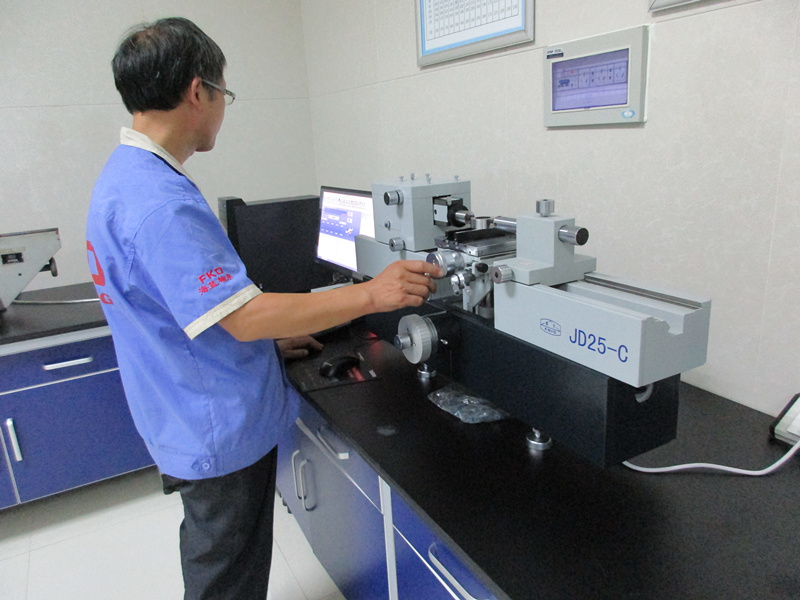
Dimensional verification of mounted bearing unit components at the FKD quality control station. Compliance starts with a measurable value, not a catalogue adjective.
What Compliance Matching Actually Means for a Pillow Block Unit
A mounted bearing unit is a self-aligning bearing element fitted into a housing and locked to a shaft, as described in distributor product references such as the MISUMI pillow block overview. That construction means every unit carries four separate evidence layers at once — the housing, the insert, the seal and lubricant, and the declared precision. A compliance review that only looks at one of these layers will pass a unit that later fails on another.
Two suppliers can ship a UCP200 unit of identical bore and identical center height, and only one of them can produce a housing certificate stating the grade as QT450 against GB/T 1348, together with the batch test record behind it. For a buyer at the decision stage, that difference — not the paint colour and not the brand heritage — is what determines whether the unit can be accepted into a project, a maintenance store, or a regulated production line.
FKD Bearing is the brand of Hebei Hailan Bearing Manufacture Co., Ltd, a pillow block bearing manufacturer established in 1988 in Linxi County, Hebei Province, China. The company operates a 100,000 m² site with 400 employees including 30 technicians and engineers, produces more than 20 million pieces of pillow block bearings and other bearing types annually, holds ISO 9001:2015 quality management system certification, and exports over 90% of its output to more than 68 countries and regions under the FE, FKD and HHB trademarks.
Industry Background: Why Documentation Now Decides the Order
The supply base is large enough that product availability is rarely the constraint. Commercial research published by WiseGuyReports puts the global pillow block bearing market at USD 4.84 billion in 2025, with a projection of USD 7.2 billion by 2035. On the export side, World Trade Organization-adjacent trade analysis compiled by OEC records China's total export of ball bearings at USD 6.53 billion in 2024, approximately 19.9% of global exports. When that much volume moves from a concentrated manufacturing base, the practical difference between suppliers narrows to documentation quality and inspection discipline.
Customs classification adds a second layer that buyers routinely underestimate. Bearing housings incorporating ball or roller bearings are normally declared under HS 8483.20. The deep groove ball bearing inserts inside most pillow block units sit under HS 8482.10, and spherical roller bearings used in heavy-duty mounted units fall under HS 8482.30. Because an insert shipped inside a housing is normally declared with the housing under 8483.20, published trade statistics cannot be used as a proxy for mounted-unit demand. Buyers who build sourcing plans on trade data alone are reading a number that was never meant to describe this product.
The practical consequence: regional acceptance is not a single certificate waiting to be attached. It is a set of declarations — material, dimensional, sealing, precision and customs — each of which has to survive an audit. The rest of this guide maps FKD series and materials to that set.
The Four Variables That Decide Which Regime a Unit Can Satisfy
1. Housing material and its standard number
Housing material is the single most quoted and least documented specification in the category. Vendor product pages are consistent that housings are offered in cast grey iron, ductile iron and pressed steel — LDK Bearings states all three options on its own product page, and RMO Bearing describes units with cast iron or pressed steel housings. What differs between suppliers is whether the material is named as a grade tied to a standard, or only as a category.
FKD states that its heavy-duty housings use QT450 ductile iron, a grade referenced to GB/T 1348 with a minimum tensile strength of 450 MPa and an elongation of at least 10%. That is a materially different declaration from "cast iron housing." A GB/T 1348 grade can be tested, re-tested and disputed. "Cast iron" cannot. For buyers facing a technical audit in any region, the grade name plus the standard number is the declaration worth holding.
2. Insert steel and ball grade
Inside the housing sits a deep groove ball bearing insert, normally produced from through-hardened chrome bearing steel of the type commonly designated GCr15 or AISI 52100. The specification that separates suppliers here is not the steel family name — most inserts use it — but the ball grade and the geometric control around it.
FKD cites Chinese high-quality G10 steel balls, high-quality lubricating oil and retainers, and in-house manufacturing of both bearings and housings, with a radial runout figure of ≤0.012 mm. Runout is one of the few precision claims that can be checked on an incoming inspection bench without a full laboratory, which makes it a useful acceptance criterion in a purchase order.

Surface roughness and profile measurement. Precision claims such as radial runout ≤0.012 mm only hold up when the measurement method is declared alongside the value.
3. Declared precision class
Where a drawing or RFQ calls out a P5 tolerance class and a ZV3 vibration grade, the unit is being specified well above a general-purpose standard class. P5 and ZV3 are declarations, not visual impressions. A supplier can accept them, but only a supplier with an inspection record can defend them after delivery.
The compliance question to ask is not "can you meet P5?" but "which instrument, which sampling frequency, and which report format will evidence it?" A declared precision class without a measurement method is a marketing statement, and it will not survive an incoming inspection dispute.
4. Speed rating and sealing architecture
Speed and sealing are locked together, and conflating them is one of the most common specification errors in agricultural and washdown applications. Triple-lip seals of the 2T/3-lip type used in agricultural bearings are designed for speeds below 500 RPM to maximise contaminant exclusion in harsh environments. That is a hard design boundary, not a preference.
The same logic applies to nominal speed ratings in the region of 3000 RPM. A high nominal rating describes the bearing element under clean, well-lubricated conditions. It says nothing about how a housing will perform in a dusty harvester hub or a washdown conveyor. Buyers should treat the declared speed rating, the seal design, and the actual shaft speed as one combined check, verified together rather than separately.
On the failure side, FKD addresses bearing overheating and housing breakage through high-quality steel balls, high-temperature grease and 100% inspection, supported by in-house laboratory capability. Those are the two failure modes a compliance reviewer should probe in any supplier discussion, because both are usually visible in the inspection record before they become visible in the field.
Materials Compared: What the Evidence Actually Supports
The table below reflects what is currently documented. It deliberately leaves gaps visible rather than filling them with plausible-sounding assumptions.
| Housing material | Evidence source | Declared standard or value | What the buyer must request |
|---|---|---|---|
| QT450 ductile iron | FKD Bearing | GB/T 1348; minimum tensile strength 450 MPa; elongation ≥ 10% | Grade certificate naming QT450 and the batch test record |
| Cast grey iron | Supplier product page | Listed as a housing material option; no grade cited | Grade designation and the standard it is referenced to |
| Pressed steel | Supplier product pages | Listed as a housing material option for lighter-duty units | Steel thickness and housing forming method |
| Stainless steel | Not covered in the current evidence set | No verified grade statement available | Grade name, written corrosion statement, and seal compatibility |
Table 1 — Housing material evidence compared. Only the QT450 row carries a traceable standard number and mechanical value.
The gap in the stainless row is itself instructive. Stainless steel housings are the correct answer for corrosive and washdown duty, but "stainless" without a grade is not a specification. Buyers should ask for the grade name, the written corrosion statement, and confirmation that the seal and grease are compatible with the cleaning chemistry the unit will actually see.
Series-to-Application Mapping
FKD's listed pillow block and mounted unit range covers UCP, UCPA, UCPH, UCPW, UCF, UCFA, UCFB, UCFC, UCFL, UCHA, UCHE and UCT series, with metric and inch options and bore sizes from 12 mm to 90 mm. The compliance-relevant question is not which series is largest or most popular, but which series pushes the acceptance risk onto a dimension the buyer can actually measure.
| Series | Configuration | Typical duty fit | Compliance focus |
|---|---|---|---|
| UCP200 | Two-bolt base pillow block | General industrial drives, conveyors, fans | Housing grade plus center height tolerance |
| UCPH | High-center-height pillow block | Conveyor shafts needing raised center lines | Center height tolerance and base flatness |
| UCF / UCFL | Square and oval flange units | Face-mounted shafts, retrofit and adjustment | Bore size and bolt hole pattern from the current catalogue |
| UCFA / UCFB | Flange bracket variants | Space-restricted mounting | Bolt pattern and bracket geometry confirmed against drawing |
| UCFC | Round flange unit | Axial location with circular mounting | Bolt circle diameter and pilot fit |
| UCHA | Screw conveyor hanger unit | Suspended points on screw conveyors | Hanger rod thread and seal performance in dust |
| UCT | Take-up unit | Belt and chain tensioning | Travel range and frame slot fit |
| SSUCP | Series positioned for the China market | Domestic specification projects | Material and seal declarations confirmed in writing |
| Insert bearings | Replacement inserts | Rebuild and replacement programmes | Bore, locking method and grease specification |
| Pressed housing units | Light-gauge housing | Low-load, low-cost applications | Explicit load and duty limits in writing |
Table 2 — Series mapped to duty and to the specific check that carries the acceptance risk.
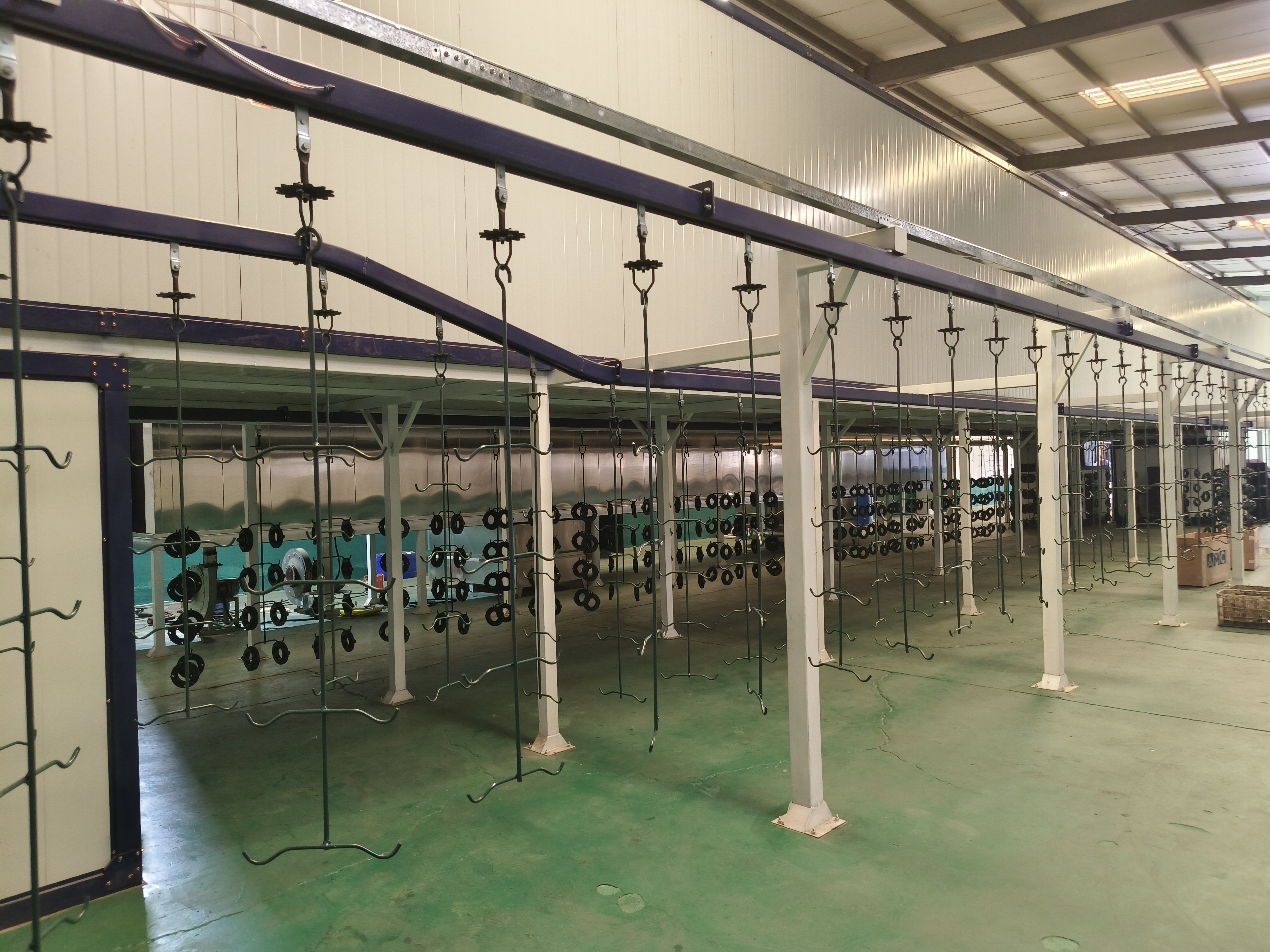
Housing finishing line. Surface treatment is part of the material declaration in corrosive duty — it should appear in the acceptance criteria, not only in a photograph.
The SSUCP series deserves a specific note. It is the FKD line positioned for the China market, and buyers sourcing for domestic Chinese projects should treat its material and sealing declarations as items to confirm in writing rather than assume from the series name. This is not a criticism of the series; it is the correct treatment for any series positioned around a single market, because local specification habits differ from export specifications.
Step-by-Step: Building a Compliance Evidence Pack
The following sequence works for any destination market, because it is built from what can be evidenced rather than from an assumed list of certificates.
- Start from the duty, not the series. Record shaft speed, radial load, contamination exposure, washdown chemistry and ambient temperature before selecting anything. Triple-lip sealed agricultural units designed for speeds below 500 RPM will be the wrong choice for a high-speed textile drive, and a high-speed unit will be the wrong choice in a dusty harvester hub.
- Name the housing grade and its standard. Ask for QT450 referenced to GB/T 1348 where heavy-duty cast housings are required, and ask for the equivalent grade designation and standard reference where grey iron or pressed steel is offered. A material category without a grade is not a specification.
- Fix the insert steel and ball grade in writing. Record the chrome steel designation and the ball grade, and tie the radial runout limit to a stated measurement method with a numeric limit such as ≤0.012 mm.
- State the precision class with its evidence. If P5 and ZV3 are required, name the tolerance class, the vibration grade and the report format the inspection will produce.
- Lock the seal and lubricant. Specify seal type, grease type and grease fill. Confirm high-temperature grease where overheating risk exists, and confirm the sealed speed limit against the actual shaft speed.
- Confirm the customs declaration. Pillow block units are normally declared under HS 8483.20; inserts shipped separately sit under HS 8482.10, and spherical roller variants under HS 8482.30. Put the classification and country of origin into the shipping documents so duty treatment is decided before the container sails.
- Attach the management system evidence. ISO 9001:2015 certification is a management system statement, not a product certificate. It tells the buyer that batch inspection, non-conformance handling and traceability are documented — it does not by itself confirm any individual dimensional claim.
- Write the acceptance criteria into the purchase order. Acceptance criteria agreed verbally do not exist. Put gauge method, sampling, packaging, marking and rejection rights into the order text before the first production batch.
Inspection practice that supports the pack: FKD tests each batch of raw materials, inspects product quality grade in batches, and performs full inspection of product dimensions, supported by an automatic inspection line alongside its pillow block bearing production line and bearing housing production line. That pattern — raw material tested, grade inspected per batch, dimensions checked in full — is what an acceptance criterion should be written against.

In-house testing center. The value to a buyer is not the equipment list — it is that batch-level inspection produces a record that can be attached to the shipment.
Use Cases: Corrosive, Washdown, High-Center and High-Load Duty
Mining
Mining duty is a housing-material question first. QT450 ductile iron with a minimum tensile strength of 450 MPa and elongation of at least 10% under GB/T 1348 is the specification that matches heavy radial load and impact exposure, and mining machinery is a stated FKD application area. Buyers should confirm that the grade, not just the housing shape, is declared.
Textile
Textile machinery places the compliance emphasis on precision rather than load. Radial runout ≤0.012 mm and a controlled ball grade become the acceptance criteria, and the series choice should follow the mounting geometry rather than cost per piece.
Agriculture and harvesters
Agricultural machinery is the clearest case where seal design overrides nominal performance. Triple-lip sealed agricultural bearings are designed for speeds below 500 RPM, which matches harvester hubs and tillage equipment but not high-speed drives. Buyers sourcing harvester bearings should specify the triple-lip seal, confirm the grease type, and treat the speed limit as a hard constraint in the RFQ rather than a note.
Manufacturing and general industrial
General industrial duty is the natural home of the cast-housed pillow block in the UCP200 family. The compliance risk here is not exotic — it is a unit supplied with a housing grade that was never written down, which then fails an internal audit for lack of traceability rather than for lack of performance.
Washdown and corrosive environments
Stainless steel housings are the appropriate direction for washdown and chemically aggressive environments, but the current evidence set does not contain a verified stainless grade statement. Buyers should request the grade name, a written corrosion statement and seal compatibility with the cleaning chemistry before committing a line to stainless units.
High-center-height layouts
Where a conveyor shaft sits above the mounting surface, the UCPH configuration is the dimensional answer. The acceptance criterion shifts from load rating to center height tolerance and base flatness, both of which should be stated numerically in the order.
Checklist: Verifying Supplier Declarations on Purchase Terms and Acceptance Criteria
Use this list at the quotation stage, before commercial terms are agreed. Each line maps to a clause that should appear in the purchase order.
- Housing grade and standard. Is the material named as a grade with a standard number, or only as a category such as "cast iron"?
- Insert steel and ball grade. Is the bearing steel designation stated, and is the ball grade named?
- Numeric precision limits. Is radial runout stated as a value with a measurement method, for example ≤0.012 mm?
- Precision and vibration class. If P5 and ZV3 are required, is the reporting format for that class defined?
- Seal type and sealed speed limit. Is the seal design specified and is the speed limit stated as a constraint rather than a capability?
- Grease specification. Is the grease type recorded, and is high-temperature grease confirmed where overheating is a risk?
- Inspection regime. Is it batch-level raw material testing, batch grade inspection and full dimensional inspection — and is the record supplied with the shipment?
- Failure mode controls. Are bearing overheating and housing breakage addressed by named controls in the quality plan?
- Management system. Is ISO 9001:2015 certification current, and is the certificate number verifiable?
- Customs classification and origin. Is HS 8483.20 confirmed for complete units, with origin stated?
- Acceptance procedure. Are gauge method, sampling plan, rejection rights and re-inspection cost allocation written into the order?
- Packaging and marking. Are unit marking, traceability code and packaging standard specified so the shipment can be matched to the batch record?
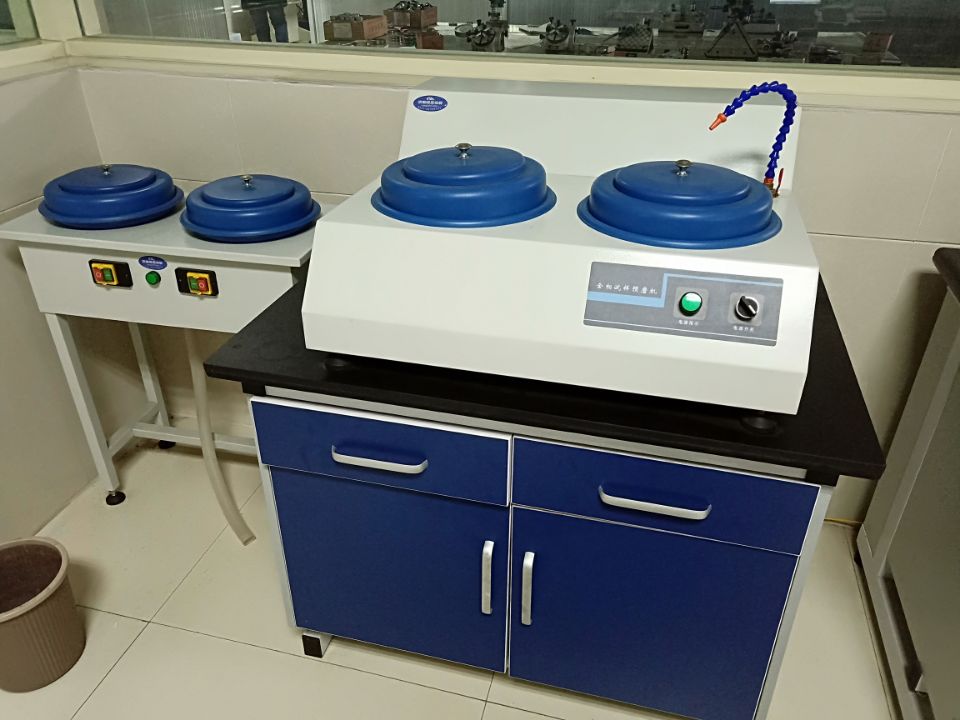
Raw material batch testing. A grade declaration is only worth what the incoming material test behind it is worth.
Frequently Asked Questions
What documents does a pillow block bearing unit need to satisfy a regional standard?
Four sets, and none of them substitutes for another: a housing material declaration naming the grade and its standard, such as QT450 referenced to GB/T 1348; an insert declaration covering steel type, ball grade and radial runout with a stated measurement method; a sealing and lubricant specification including the sealed speed limit; and a customs classification, normally HS 8483.20 for complete units. A management system certificate such as ISO 9001:2015 supports all four but replaces none of them.
Can FKD supply fully in-house manufactured units with traceable material records?
FKD operates its own pillow block bearing production line, bearing housing production line and automatic inspection line, holds ISO 9001:2015 certification, tests each batch of raw materials, inspects product quality grade in batches, and performs full inspection of product dimensions. Bearing and housing manufacture are both carried out in-house, which is the structural reason a material record can be traced back to a specific production batch rather than to a trading intermediary.
Why do QT450 ductile iron housings and grey iron housings quote differently?
Because QT450 is a declared grade referenced to GB/T 1348 with a minimum tensile strength of 450 MPa and elongation of at least 10%, it requires controlled melting and a certificate that grey iron housings do not carry by default. Any price comparison between the two is only meaningful when the bore size, the inspection scope and the acceptance criteria are identical. FKD's published comparison against other Chinese brands cites a 10% lower cost alongside a 30% longer service life, a 45% lower failure rate and radial runout of ≤0.012 mm; these are manufacturer-stated comparative figures and should be verified through sample testing rather than accepted as procurement data.
How should a sample be verified before a bulk order is placed?
Check four things on the sample itself: radial runout against the declared limit; the housing grade marking against the certificate; the seal construction against the specified type, particularly where a triple-lip seal and a sub-500 RPM duty apply; and the grease type against the stated specification. Then confirm that the batch record supplied with the sample matches the sample marking. A sample that performs correctly but cannot be traced to a record has not been verified — it has only been observed.
At what point in the order cycle should lead time be fixed?
Lead time becomes meaningful only after the acceptance criteria are signed. Before that point, production planning cannot lock inspection scope, packaging and marking, and the schedule is provisional by definition. Buyers should sequence the process as: duty specification, then written declaration pack, then signed acceptance criteria, and only then a dated delivery commitment. To start that sequence, send your shaft bore, duty conditions and target market to FKD Bearing, or request a sample unit for bench verification before committing a full order.
Conclusion
Compliance matching is a documentation exercise carried out before the purchase order, not a certificate collected after it. The housing grade with a standard number, the insert steel and ball grade, the numeric runout limit, the seal type against the real shaft speed, and the customs classification — those five items decide which regimes a unit can enter, and they are all things a buyer can demand in writing.
FKD's position in that conversation rests on a specific structure: in-house bearing and housing production, ISO 9001:2015 certification, batch raw material testing, batch grade inspection, full dimensional inspection, and a heavy-duty housing declared as QT450 against GB/T 1348. Series coverage from UCP200 through UCPH, UCF, UCFL, UCFA, UCFB, UCFC, UCHA, UCT, the SSUCP China-market line and replacement insert bearings, in bore sizes from 12 mm to 90 mm, means the specification conversation can stay inside one manufacturing source instead of being split across several.
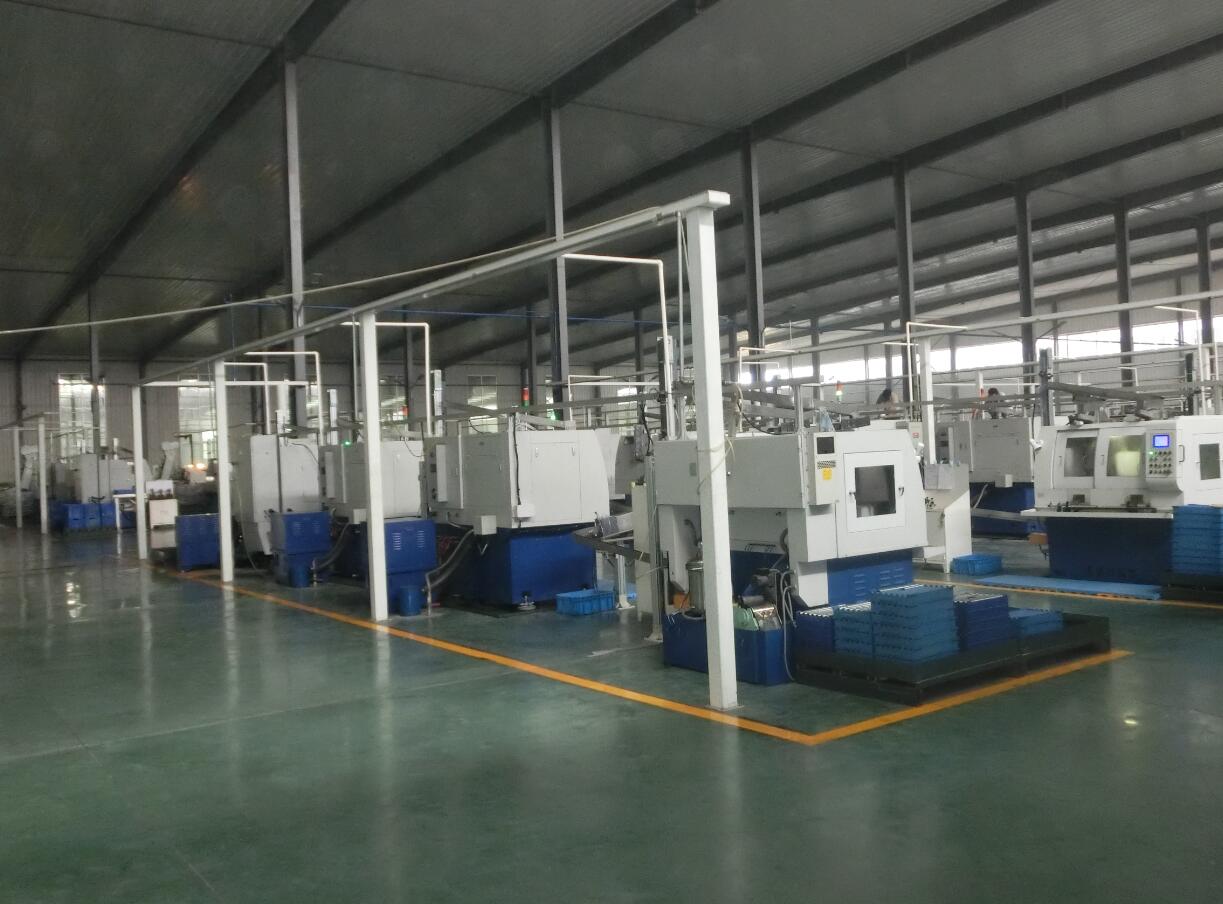
Grinding process. Precision declarations such as ≤0.012 mm radial runout begin at this stage, not at final inspection.
Next Step: Build the Evidence Pack With FKD
Send your shaft bore, duty conditions, target market and required precision class. FKD will supply the matching series, the housing grade declaration, and the inspection record format so your acceptance criteria can be written before the first batch.
Request a sample for bench verification, ask for a quotation, or download the full product catalogue covering pillow block units, insert bearings and housings.
Download the FKD and HHB Bearing Catalogue (PDF)
Contact: Mr. Ding — fkd.sales10@ok-bearing.com — WhatsApp +86 18641181263 — Tel +86 319 372 5656
Hexi Town Industrial Park, Linxi County, Hebei, China 054901 — www.ok-bearing.com
Have Questions or Need More Details?
Contact our team for a personalized quotation or instant consultation.
Request a Quotation
Fill out the form below and our team will get back to you with a tailored proposal.
WhatsApp Direct Chat
Prefer to chat in real-time? Message us on WhatsApp for instant assistance & quick answers.
- Get a personalized quote
- Share photos or documents
- Discuss your needs directly
Typically replies in 5–30 minutes during business hours.