
Pillow Block Supplier Audit: Verify Seven Unit Types Before Ordering
Pillow block bearing units are mature, low-drama components, which is exactly why they get bought on a price per piece and then cause delivery problems. The audit described here treats supplier evaluation as a capability check rather than a quote comparison: does the range really cover every unit on the bill of materials, does the material behind each unit stay identical between the first order and the third, and can the stated capacity and lead time carry the date written in the contract?
A mounted bearing unit is an assembly, not a single part. In the general construction described by industrial distributor MISUMI, a pillow block combines a self-aligning ball bearing with a plummer block housing and is fixed to the shaft with a fastening screw. Once a buyer accepts that description, the commercial consequence follows: two suppliers quoting the same series can still ship different housings, different insert grades, different seals and different finishes, and the difference surfaces only at installation or at the second delivery.
This audit framework is written for the evaluation-to-execution stage, where the supplier shortlist already exists and the question has moved from "who sells pillow blocks" to "which supplier can evidence range, material consistency and delivery". It uses the FKD BEARING range — the brand of Hebei Hailan Bearing Manufacture Co., Ltd, a Chinese pillow block bearing manufacturer founded in 1988 and based in Linxi County, Hebei — as a worked reference for what to request, and it keeps a firm line between what a supplier states and what a buyer must verify.
What a capability audit is, and what it is not
A pillow block bearing supplier capability audit is a documented check of six items performed before the purchase order is released: series coverage, housing and insert material specification, precision and speed claims, production capacity and lead time, quality-system scope, and commercial terms with acceptance criteria.
It is not a factory tour, and it is not a count of certificate logos. A tour shows the equipment a host chooses to display. A certificate shows that a management system was assessed by a certification body on a given date; it does not name the models you are buying. Neither answers the practical questions: whether the 211 and 212 sizes you need run on the same line as the 205, whether the ductile iron grade printed in the drawing is the grade in the casting, or whether a 30–45 day lead time applies to a mixed-model order or only to one model running alone.
The audit output is a shortened, harder list of claims — which are documented, which are conditional, and which must be written into the order as acceptance criteria. That list, not the quotation, is what the buyer actually negotiates from.
Why range comes first, and why external statistics cannot replace it
Range is the first test because it is the only one that can void an otherwise acceptable quotation. Mounted bearing units are normally declared under HS 8483.20, the subheading for bearing housings incorporating ball or roller bearings, while the ball bearing inserts alone sit under HS 8482.10. That classification split matters commercially: published trade statistics therefore cannot be used to rank or shortlist suppliers of complete mounted units, because the data does not separate a finished pillow block from any other housing containing a bearing, and inserts move under a different code entirely.
The practical conclusion is that supply capability has to be audited from the supplier's own model list, catalogue and production evidence, not inferred from export volumes. Range is also where a supplier's real depth shows. A catalogue front page can display twelve families; only a dimensional list with a bore value against every suffix proves that the model behind the name exists as a sellable item.

Step 1 — Convert the bill of materials into a unit-family envelope
Before contacting any supplier, sort every pillow block position on the machine into a unit family. Families differ by housing geometry and by how the unit is fixed, not by brand, and the same shaft size can require three different families on one machine. The seven families in scope for this audit are top-based pillow blocks, high center height pillow blocks, screw conveyor hanger units, flange bracket units, adjustable flange units, take-up units, and stainless steel units.
Series evidence is the next layer. A supplier that publishes UCPH205–212, UCFA205–212, UCHA205–212, UCFB205–210 and SSUCP205–210 is stating a coverage map, and that map must be read literally. UCFB205–210 stops two steps earlier than UCPH205–212 ends, and SSUCP205–210 stops at the same point as the bracket series. If the bill of materials contains a 211 or 212 in a bracket or stainless position, that coverage has to be rechecked line by line rather than assumed from the headline range. Equally, a range beginning at 205 does not serve a 204 shaft position at all.
Published FKD-associated product listings go wider than those five series, naming UCP, UCPA, UCPH, UCPW, UCF, UCFA, UCFB, UCFC, UCFL, UCHA, UCHE and UCT families with metric and inch options and bore sizes from 12 mm to 90 mm. Because that is a commercial product listing rather than a dimensional table, the audit still requires the current catalogue to confirm each suffix and bore before the range is treated as verified.
| Unit family | Series evidence to request | What the document must show | Audit question if it is missing |
|---|---|---|---|
| Top-based pillow block | UCP200 series; UCPA family | Bore per suffix, housing height, bolt spacing | Which suffixes are stocked and which are made to order? |
| High center height pillow block | UCPH205–212 | Center height per size and base dimensions | Does the raised center height change the mounting footprint? |
| Screw conveyor hanger unit | UCHA205–212 | Hanger configuration and shaft fixing method | Is the hanger unit supplied complete or as a housing only? |
| Flange bracket unit | UCFB205–210 | Bracket geometry and bolt pattern | Why does this series stop at 210 when others reach 212? |
| Adjustable flange unit | UCFA205–212 | Adjustment range and locking method | How much alignment movement does the adjustment actually allow? |
| Take-up unit | UCT family | Slide travel and frame compatibility | Is the take-up frame part of the supply or buyer-supplied? |
| Stainless steel unit | SSUCP205–210 | Which components are stainless and to what grade | Is the insert stainless, or only the housing? |
Step 2 — Test coverage with documents, not catalogue fronts
Coverage is proven by four documents, and a supplier that cannot produce them has not yet passed this step: a current catalogue with dimensional tables, a model list that maps every suffix to a bore, a statement of which models are manufactured in-house versus traded in, and a clear position on inch-bore availability where the machine is built to imperial dimensions.
For context on how wide a full mounted-unit portfolio can run, the certification records associated with the FKD range list flange cartridge units UCFC205–212, square flange units from UCF205 through UCF328, oval flange units UCFL205 through UCFL328, insert bearings UC205 through UC320, and the SNL508 plummer block. Those lists are useful as a coverage cross-check: if a supplier's catalogue omits families that appear in its own certification documentation, the catalogue is incomplete rather than the range being narrow — and an incomplete catalogue is itself a delivery risk, because unpriced models become exceptions at the order stage.
Red flags at this step
- A series named on a web page but absent from the downloadable catalogue.
- No bore value against a model suffix, so shaft fit cannot be confirmed.
- Mixed-model orders quoted at a single lead time without distinguishing stocked from made-to-order items.
- Stainless series offered with no statement of which components are stainless.
Step 3 — Material consistency is the audit question that saves the second order
Housing material is where quotations diverge most quietly. Across the market, pillow block housings are offered in cast grey iron, ductile iron and pressed steel, as stated on the product page of supplier LDK Bearings; that spread is a product-tier boundary, not a cosmetic choice, and a quotation that does not name the grade has not specified the product.
Grade statements only become useful when they are specific. The FKD range references QT450 ductile iron for heavy-duty housings, described in company material as providing a minimum tensile strength of 450 MPa and elongation of at least 10% under GB/T 1348. For a buyer, the elongation figure is the one to notice: housings that see shock loading and misalignment depend on ductility, not only on strength, and a grade claim without a casting source is only half a claim. The audit therefore asks three questions in sequence — which grade, to which standard, and cast where — and expects the same answer in the drawing, the quotation and the material certificate.
Stainless and plastic options need separate treatment. Where a stainless unit such as the SSUCP series is proposed for wet or washdown positions, the audit must establish whether the housing, the insert, or both are stainless, because a stainless housing with a chrome steel insert behaves very differently from a fully stainless unit in a corrosive environment. Where a plastic housing is offered, ask for the load and temperature basis on which it is recommended and confirm that the insert grade is unchanged from the cast-housing version of the same model.
Sealing belongs in the same material conversation, because seal choice and speed are linked. Supplied industry material describing triple-lip configurations in agricultural bearings states that these seals are intended for speeds below 500 RPM, in order to maximize contaminant exclusion in harsh environments. That is a design trade, not a defect: a triple-lip unit is a poor match for a high-speed position and a sensible match for a slow, dusty one. The audit question is simply whether the seal quoted matches the speed and contamination of the actual position.
Finish closes the consistency gap. Two-bolt housings are commonly supplied green painted, again per LDK's own product statement, so colour, film and touch-up rules should be written into the specification. Two batches of structurally identical housings in visibly different finishes are a common source of line-side rejection.
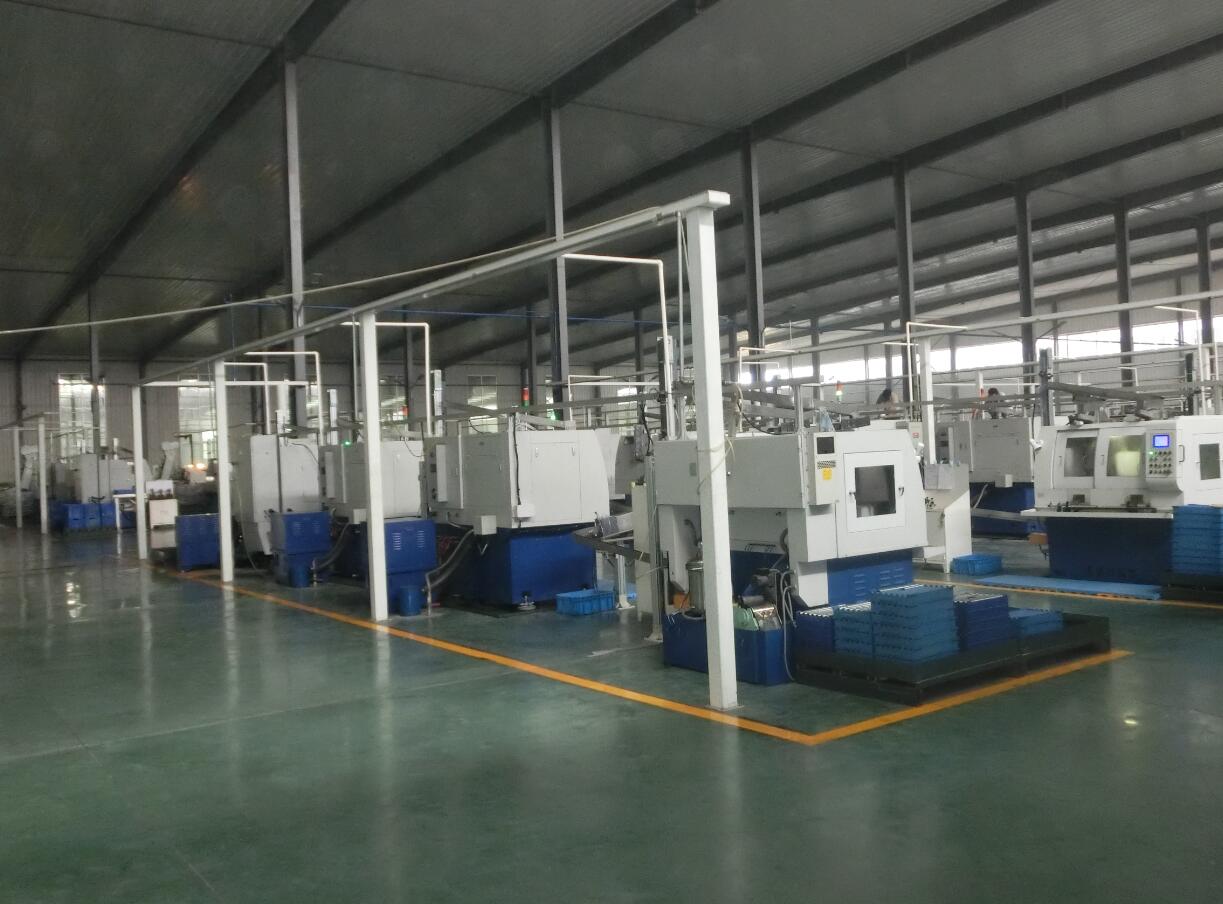
Step 4 — Substantiate precision and speed claims: P5, ZV3 and 3000 RPM
Precision and speed statements are the most quoted and least verified part of a pillow block specification. Three designations recur: P5, a precision or tolerance grade; ZV3, a vibration and noise grade notation; and a rotational speed figure such as 3000 RPM. Each is a claim about a manufacturing and inspection result, and each should be treated as one.
The audit rule is short: a grade printed on a label is a claim, while a grade printed on an inspection record is evidence. Buyers should ask for the parameter as it appears on the drawing, the gauge or instrument used to check it, the sampling plan, and the record format that will accompany the shipment. Where a supplier states that products are 100% tested — the quality-control position recorded for the FKD range — the follow-up question is what the 100% covers: dimensional checks, rotation, noise, or visual and marking inspection. "100% tested" is a scope statement, and an unqualified one is not auditable.

Step 5 — Capacity and lead time that can actually carry the commitment
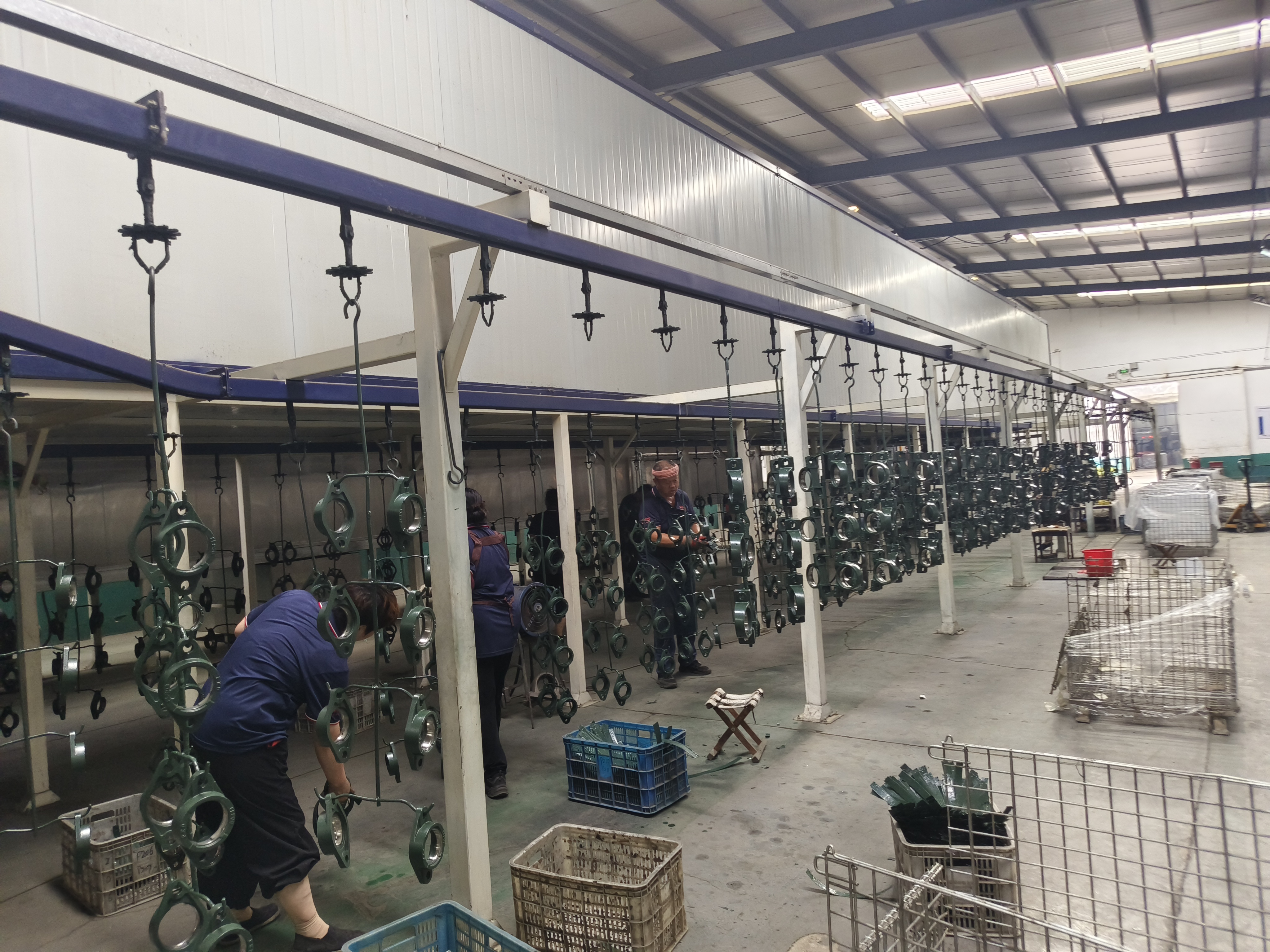
Capacity should be audited as a set of numbers with a stated scope, then converted into a delivery question. The FKD capability record states a monthly production capacity of 2,000,000 pieces, a typical lead time of 30–45 days, and a minimum order quantity of 1,000 pieces. The company profile adds a site of 100,000 m² with a plant of more than 65,000 m², over 400 employees including 30 technicians and engineers, more than 90% of production on automated equipment, annual production and sales above 20 million pieces across pillow block bearings, deep groove ball bearings, taper roller bearings and other types, and export coverage of over 90% of output to more than 68 countries and regions.
Two readings follow. First, a capacity figure is enterprise-wide. A 100,000-piece order equals 5% of one month's stated capacity (calculated as 100,000 ÷ 2,000,000, from company-stated figures, not a measured utilization), which sounds comfortable until the buyer asks how much of that month is already allocated to other series and how much can be reserved for a specific model mix. Second, lead time needs a defined clock. "30–45 days" is only enforceable once the trigger is named: deposit received, drawing approved, or first-article sample signed off. Repeat orders and first orders rarely share the same clock, and mixed-model orders with a 211/212 tail behave differently from single-model runs.
A track record is the third data point, and it should be size-matched to the buyer's own volume. The supplied case record for the FKD range describes an agricultural machinery OEM in India running harvester combine applications, 100,000 pieces supplied over a two-year relationship, with the outcome recorded as stable operation and the application characteristics noted as high speed, low noise and high quality. For an agricultural buyer, that record is more relevant than a general export statement, because it covers a continuous multi-year supply of a high-volume, high-vibration application rather than a single shipment.
Step 6 — Read the certificate scope, not the certificate logo
A quality certificate is evidence of an assessed system, and its value in an audit depends entirely on the scope wording and the expiry date. The FKD quality management system is certified to ISO 9001:2015 under certificate 00124Q31127R6M/1300, issued by CQC on 25 July 2024 and valid to 27 February 2027, against ISO 9001:2015 and GB/T 19001-2016. The recorded scope covers production and processing of outer spherical ball bearings, deep groove ball bearings, tapered roller bearings, self-aligning ball bearings and thrust ball bearings.
That wording is the audit target. The scope describes bearing types rather than naming pillow block units model by model, so a buyer should confirm how unit assembly and housing production fall under the certified system, and should verify the certificate with the issuing body rather than accepting a scanned image. Three further certificates sit alongside it, each with its own validity window: ISO 14001:2015 under 00125E30330R1M/1300, issued by CQC on 22 January 2025 and valid to 20 January 2028; ISO 45001:2018 under 00125S30215R1M, issued by CQC on 17 January 2025 and valid to 20 January 2028 against GB/T 45001-2020; and ISO 50001:2018 under 00225EN006R1M, issued by CQM on 3 January 2025 and valid to 2 January 2028 against GB/T 23331-2020. Diarising those expiry dates is part of supplier management, not paperwork: a certificate that lapses mid-contract changes the buyer's compliance position without any change to the product.
Step 7 — Purchasing terms and acceptance criteria that protect the delivery date
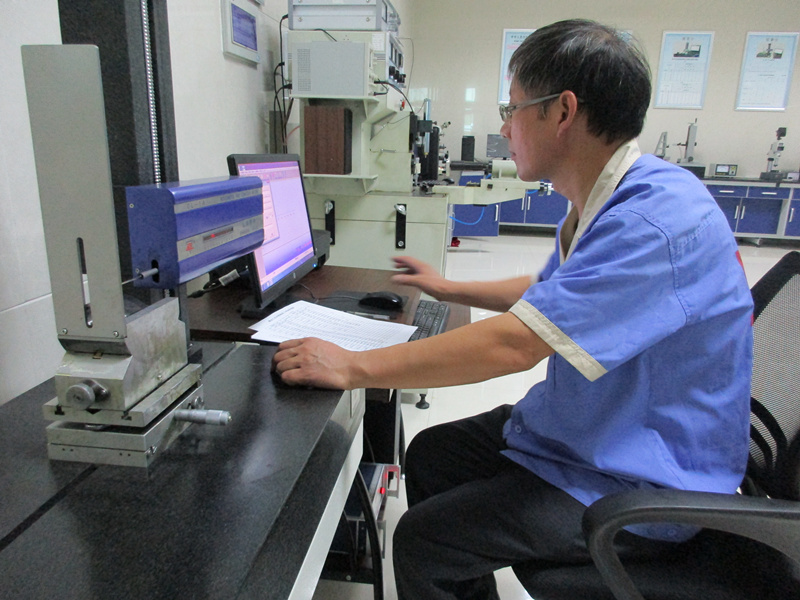
Commercial terms are not a separate negotiation from the technical audit; they are where the audit becomes enforceable. The recorded purchasing terms for the FKD range set a minimum order quantity of 1,000 pieces, delivery under FOB, CIF or EXW, payment of 30% in advance with the balance paid before shipping, and support for pre-shipment inspection as the acceptance route. Each line needs one clarifying question before signature.
| Term | Recorded position | What the buyer should fix in the order |
|---|---|---|
| Minimum order quantity | 1,000 pcs | State whether 1,000 applies per model or per order, and how a mixed-model order is counted |
| Delivery terms | FOB / CIF / EXW | Name the exact Incoterm and named place; note that risk and cost transfer differently under each |
| Payment | 30% advance, balance before shipping | Link the balance release to a passed pre-shipment inspection, not to a shipping notice |
| Acceptance | Pre-shipment inspection supported | Define inspection scope, sampling, accept/reject criteria and who attends |
| Lead time | 30–45 days typical | Define the start trigger and the treatment of mixed-model tails |
| After-sales | Remote support and engineer support | State response expectations and the technical contact route |
The payment structure is the reason inspection discipline matters. When 30% is paid in advance and the balance falls due before shipping, the buyer's last practical control point is the pre-shipment inspection, so that inspection should be specified as a condition of the balance rather than a courtesy. A workable inspection scope covers quantity by model, marking and labelling, packing and pallet configuration, dimensional checks against the catalogue, visual and finish checks against the agreed colour and coating, and a rotation check — plus the material certificate and any precision records requested at Step 4.
Where the audit changes the answer: four practical positions
Harvester and agricultural drives. Dust, chaff and vibration dominate, and the seal decision outranks the speed headline. A triple-lip configuration intended for speeds below 500 RPM suits a slow, heavily contaminated position; a stainless SSUCP unit is a corrosion answer rather than an abrasion answer, so the two should not be substituted for each other. The India harvester case recorded above is the reference point to ask about when volume and continuity matter.
Screw conveyor hanger positions. UCHA hanger units sit inside the conveyor run, where access for replacement is poor and misalignment is normal. The audit question is whether the hanger unit arrives complete and whether the 205–212 range covers every hanger station on the conveyor, because a missing 211 hanger becomes a stoppage rather than a substitution.
Flange and bracket mounting. UCFB bracket units and the wider UCF and UCFL families fix the unit to a frame face rather than a base, so bolt pattern and bracket geometry matter more than center height. Where alignment cannot be machined in, UCFA adjustable flange units in the 205–212 range exist precisely to absorb that misalignment, and the audit should establish how much adjustment the unit actually provides.
Take-up and high-center positions. UCT take-up units handle belt and chain tensioning, and the audit boundary is whether the take-up frame is part of the supply. UCPH high center height units raise the shaft axis above the mounting surface, so the raised height must be confirmed against the machine envelope rather than assumed from the series name.
Frequently asked questions
What should a pillow block bearing manufacturer for agricultural equipment be able to prove?
A manufacturer supplying agricultural equipment should be able to prove four things: range coverage across the units the machine actually uses, including hanger, flange, take-up and stainless families; a named housing material grade with a stated standard, such as QT450 ductile iron to GB/T 1348 with minimum tensile strength of 450 MPa and elongation of at least 10%; a documented quality system with a scope that covers the bearing types supplied, such as ISO 9001:2015 under certificate 00124Q31127R6M/1300, valid to 27 February 2027; and production evidence, such as the FKD record of 2,000,000 pieces monthly capacity with a 30–45 day typical lead time. The supplied case record for the FKD range, an Indian agricultural machinery OEM running harvester combines with 100,000 pieces over a two-year relationship and stable operation, is the type of reference an agricultural buyer should ask to see in writing.
How do I verify that series coverage really matches my shaft sizes?
Ask for a current catalogue with a bore value printed against every model suffix, then check the suffix range literally. A supplier listing UCPH205–212 and UCFB205–210 covers eight sizes in the high-center family and only six in the bracket family, so any 211 or 212 bracket position falls outside the stated bracket range and needs separate confirmation. Confirm whether models are manufactured in-house or traded in, whether inch-bore versions are available, and cross-check the catalogue against the supplier's own certification documentation — for example, the UCFC205–212, UCF/UCFL through 328 and UC205–UC320 lists that appear in the FKD certification records.
How can I confirm housing material and grade before ordering?
Require the grade to be named three times and to match: in the drawing or specification you issue, in the supplier's quotation, and in the material certificate that accompanies the shipment. Market housings are offered in cast grey iron, ductile iron and pressed steel, so an unnamed grade is an unspecified product. Where ductile iron is quoted, ask for the standard as well as the grade — QT450 to GB/T 1348, with minimum tensile strength of 450 MPa and elongation of at least 10%, is a checkable statement, whereas "ductile iron" alone is not. Add finish to the same clause: two-bolt housings are commonly supplied green painted, and colour and coating must be written to avoid batch-to-batch rejection.
How should P5, ZV3 and 3000 RPM claims be verified?
Verify them as records, not labels. Ask for the precision grade P5 and the vibration grade ZV3 as they appear on the drawing, the instrument used to check them, the sampling plan, and the record that will ship with the goods. Where a supplier states 100% testing, ask what the 100% covers. For any speed figure such as 3000 RPM, ask which configuration it applies to, because speed capability depends on lubricant, load, mounting and seal — and triple-lip seals are described in supplied industry material as intended for speeds below 500 RPM, so a headline speed number should not be applied to a triple-lip unit without written confirmation.
What are the purchasing terms and acceptance criteria?
The recorded terms for the FKD range are a minimum order quantity of 1,000 pieces, delivery under FOB, CIF or EXW, payment of 30% in advance with the balance before shipping, and support for pre-shipment inspection as the acceptance criterion. Because the balance falls due before shipment, the inspection is the buyer's control point: specify its scope — quantity by model, marking, packing, dimensional and visual checks, finish, rotation — and make balance release conditional on a passed inspection. Confirm in writing whether the 1,000-piece minimum applies per model or per order, and define what starts the 30–45 day lead time clock. Buyers ready to move from audit to trial can request the current range documentation and a quotation through FKD BEARING, and download the FKD and HHB bearing catalogue to begin the model-by-model coverage check.
Conclusion: the audit ends in the purchase order, not in a scorecard
A pillow block bearing supplier passes a capability audit when seven unit families are evidenced by documents rather than names, when the housing grade is named to a standard and repeated in the certificate, when precision and speed claims arrive with the inspection records behind them, when the capacity and lead-time figures are read at the right scope, and when the commercial terms convert all of that into conditions the buyer can enforce at pre-shipment inspection.
The FKD BEARING range illustrates how the evidence should look: series coverage from UCPH205–212 through UCFA205–212, UCHA205–212, UCFB205–210 and SSUCP205–210; QT450 ductile iron referenced for heavy-duty housings; a 2,000,000-piece monthly capacity with a 30–45 day typical lead time and a 1,000-piece minimum order quantity; and management-system certificates whose scopes and expiry dates can be checked. None of those statements removes the need for the audit — they simply make the right questions easier to ask, and the answers easier to write into the order.
Have Questions or Need More Details?
Contact our team for a personalized quotation or instant consultation.
Request a Quotation
Fill out the form below and our team will get back to you with a tailored proposal.
WhatsApp Direct Chat
Prefer to chat in real-time? Message us on WhatsApp for instant assistance & quick answers.
- Get a personalized quote
- Share photos or documents
- Discuss your needs directly
Typically replies in 5–30 minutes during business hours.