
Solving Shaft Alignment Issues with UCFA Adjustable Flange Units

Shaft misalignment rarely announces itself at installation. It appears later as vibration, a hot housing, a worn seal lip, or a bearing unit that fails earlier than the maintenance plan expected. In most cases the bearing is not the cause; the geometry between the shaft axis and the mounting face is.
Adjustable flange units exist to correct that geometry at the mounting interface. FKD BEARING, the brand of Hebei Hailan Bearing Manufacture Co., Ltd., produces the UCFA205–UCFA212 adjustable flange unit series, specified with a 3000 RPM speed basis, P5 ZV3 precision grade and cast iron / QT450 housings. This article explains what misalignment does to a mounted unit, how the adjustable flange design addresses it, and how to evaluate the series during procurement.
What Shaft Misalignment Does to a Mounted Bearing Unit
Misalignment is an offset between the shaft axis and the bearing axis at the mounting position. It appears in two forms: angular misalignment, where the two axes meet at an angle, and parallel misalignment, where the axes are offset but remain parallel. Both place the rolling contact pattern on a narrower band of the raceway than the design intends.
The consequences follow the same pattern across machine types:
- Load concentration. Contact stress rises where the ball path localises, which shortens raceway fatigue life.
- Heat and vibration. A unit running out of line generates vibration that is transmitted into the housing, the shaft and the surrounding frame.
- Seal and cage stress. Seals are sensitive to shaft runout; cages are sensitive to uneven ball loading.
- Repeat failures. Replacement units repeat the failure because the mounting geometry was never corrected.
Insert bearings of the type used in FKD mounted units are listed within the company's certification scope as outer spherical ball bearings, a geometry that permits a small amount of self-alignment inside the housing. That internal freedom is useful but limited: it absorbs small deflection and does not compensate for a mounting face that is out of position relative to the shaft. Where the frame is welded, fabricated, or reworked in the field, the correction has to happen at the housing-to-frame interface.
Why Alignment Problems Keep Appearing in Real Installations
Misalignment is rarely a design error. It is usually an accumulation of small, ordinary conditions:
- Fabricated frames that distort after welding.
- Tolerance stack-up between independently machined components.
- Retrofit work where the existing bolt pattern is reused rather than re-machined.
- Belt or chain tensioning that pulls the shaft out of position after the bearings are fixed.
- Thermal growth in drives that run hot.
- Worn or damaged mounting faces after a previous failure.
The category itself is large and stable. Pillow block bearings, the mounted bearing category that includes flange and pillow block housings, were valued at approximately USD 6.1 billion in 2024 according to IndexBox industry analysis. Fortune Business Insights reported that plummer blocks accounted for approximately 42.51% of mounted bearing revenue share in 2024. The wider bearings market was estimated at USD 58.6 billion in 2024 and projected to reach USD 143.6 billion by 2034 by Global Market Insights.
Supply is concentrated. China's total export of ball bearings reached USD 6.53 billion in 2024, representing 19.9% of global exports, according to OEC. Mounted units are commonly standardised under ISO sizing and JIS precision compatibility, which means a buyer comparing manufacturers is usually comparing execution and mounting detail rather than a fundamentally different product concept.
Agricultural machinery shows the problem most clearly. Harvesters combine shock loading, uneven ground, dust and seasonal pressure to return machines to service quickly. A combine header or cleaning shoe that runs out of line will not wait for a convenient maintenance window.
The Adjustable Flange Solution: UCFA205–UCFA212
A flange unit combines a housing with an insert bearing and mounts against a flat face rather than onto a base. The UCFA series is FKD's adjustable flange version. Its defining feature is adjustment at the mounting interface: the housing position can be trimmed during installation, before the fasteners are finally tightened, so the shaft can be brought into line with the driven component without re-machining the frame.
The series covers eight sizes, UCFA205 through UCFA212, which allows one mounting approach to be applied across a machine range instead of switching housing types between stations.
| Parameter | UCFA205–UCFA212 adjustable flange units |
|---|---|
| Series sizes | UCFA205, UCFA206, UCFA207, UCFA208, UCFA209, UCFA210, UCFA211, UCFA212 |
| Speed basis | 3000 RPM |
| Housing material | Cast iron / QT450 |
| Insert bearing material | Chrome steel GCR 15 (AISI type 52100 chrome steel) |
| Ball grade | G10 steel ball |
| Precision grade | P5 ZV3 |
| Alignment correction | Adjustable housing position at the mounting interface before final tightening |
| Typical duty | Manufacturing, agricultural machinery, textile machinery, mining machinery |
Two specification points matter during evaluation. The first is the 3000 RPM speed basis, which sets the continuous-operation reference for the series and should be checked against the actual shaft speed of the application, including any future increase in line speed. The second is the P5 ZV3 precision grade, which describes the dimensional and running accuracy of the unit and the vibration characteristic of the bearing — the parameter that most directly affects noise and smooth running in high-speed positions.
Step-by-Step: Correcting Alignment with UCFA Units
The adjustment feature only delivers value when the installation sequence is followed in order. The steps below describe the practical workflow.
1. Verify the mounting face and bolt pattern
Check that the mounting face is flat and free of burrs, weld spatter and paint build-up. Confirm that the bolt holes in the frame allow the housing to move within the adjustment range needed before the fasteners are tightened.
2. Seat the unit without final tightening
Position the unit on the shaft and against the face, and engage the fasteners only to the point where the housing is held but still able to shift. The adjustable design depends on this remaining freedom.
3. Bring the shaft into line
Use the adjustable housing position to align the shaft with the driven component — coupling, pulley or sprocket. Work in small increments and check both angular and parallel alignment, because correcting one can disturb the other.
4. Confirm with a measurement, not by eye
A dial indicator on the shaft or coupling, or a straightedge and feeler check on smaller drives, gives a repeatable reading. Record the values so the next maintenance interval starts from a known baseline.
5. Tighten in sequence and re-check
Tighten the fasteners progressively and diagonally, then re-check the alignment reading. Tightening can pull a housing out of position, especially on fabricated frames, so the reading must be confirmed after the fasteners are seated.
6. Run the machine and re-check warm
After the first operating period, re-check alignment and fastener condition with the machine at normal working temperature. Thermal growth is one of the most common reasons a correctly aligned cold machine drifts out of line.
7. Record the setting
Note the final position, the readings and the date. When the unit is replaced, the recorded values shorten the next alignment and reduce the risk of repeating the original failure.
Where Adjustable Flange Units Fit: Use Cases
Harvesting and agricultural machinery
An agricultural machinery OEM in India has used 100,000 pieces across a two-year supply relationship for harvester combine applications, with stable operation reported. The application requirements recorded for that supply relationship were high speed, low noise and high quality — the combination that makes precision grade and housing execution relevant rather than incidental. Adjustable flange mounting suits this environment because header, cleaning and conveying stations are assembled from fabricated structures where the shaft-to-face relationship is difficult to hold during production and can shift again after field repairs.
Textile machinery
Textile lines run many closely spaced shafts at continuous speed, and noise and vibration are quality issues rather than comfort issues. A flange unit that can be trimmed into line at installation reduces the rework loop on line assembly.
Mining and conveying
Conveyor and screen drives on structural steel are typically mounted on surfaces that are flat within fabrication tolerance rather than machined tolerance. The adjustable interface gives maintenance teams a correction path that does not require re-drilling the frame in the field.
General industrial drives
Fans, blowers, mixers and small conveyors rebuilt in place benefit from the same logic: correcting the housing position is faster and less invasive than re-machining a mounting pad.
Series Shortlist: Ranking FKD Units by Fit for Alignment-Sensitive Positions
The ranking below orders FKD series by how much position correction the mounting style allows before final tightening. It is an application-fit order, not a claim that one series outperforms another: the specification basis is shared across these series, and the selection difference is the mounting interface.
| Rank | Series | Mounting style | Alignment correction at installation | Housing | Precision / speed basis | Best fit |
|---|---|---|---|---|---|---|
| 1 | UCFA adjustable flange units (UCFA205–UCFA212) | Flange, adjustable position | Yes — housing position trimmed at the interface | Cast iron / QT450 | P5 ZV3 / 3000 RPM | Stations where bolt pattern and shaft axis cannot be guaranteed to match |
| 2 | UCP pillow block units (UCP200 series) | Base mount on a flat surface | Yes — through shimming and positioning of the base | Cast iron / QT450 | P5 ZV3 / 3000 RPM | General shaft support on machined frames |
| 3 | UCF square flange units (UCF205–UCF328) | Four-bolt flange, fixed pattern | No — position set by the bolt pattern | Cast iron / QT450 | P5 ZV3 / 3000 RPM | Rigid face mounting on plates and frames |
| 4 | UCFL oval flange units (UCFL205–UCFL328) | Oval flange, fixed pattern | No — position set by the bolt pattern | Cast iron / QT450 | P5 ZV3 / 3000 RPM | Face mounting where footprint is limited |
| 5 | UCFC flange cartridge units (UCFC205–UCFC212) | Cartridge in a circular flange housing | No — position set by the flange recess | Cast iron / QT450 | P5 ZV3 / 3000 RPM | Recessed or through-plate mounting |
Comparison Table: UCFA Adjustable Flange vs UCP Pillow Block vs UCF Square Flange
The three series below share the same insert bearing specification base. The practical selection difference is how each one is fixed to the machine and therefore how much alignment correction the installer retains.
| Comparison point | UCFA205–UCFA212 | UCP200 series | UCF square flange (UCF205–UCF328) |
|---|---|---|---|
| Mounting interface | Flange face, adjustable housing position | Base, bolted to a flat surface | Flange face, fixed four-bolt pattern |
| Alignment correction after mounting | Available before final tightening | Available through base shimming and positioning | Not available; position fixed by bolt holes |
| Insert bearing material | Chrome steel GCR 15 (AISI type 52100 chrome steel) | Chrome steel GCR 15 | Chrome steel GCR 15 |
| Ball grade | G10 steel ball | G10 steel ball | G10 steel ball |
| Housing material | Cast iron / QT450 | Cast iron / QT450 | Cast iron / QT450 |
| Speed basis | 3000 RPM | 3000 RPM | 3000 RPM |
| Precision grade | P5 ZV3 | P5 ZV3 | P5 ZV3 |
| Common industries | Agricultural machinery, manufacturing, textile, mining | Manufacturing, agricultural machinery, textile machinery, mining machinery | Producer and harvesting machinery, mining, textile, agricultural machinery |
The consequence for procurement is straightforward: if the frame is fabricated, repaired or shared across machine variants, the adjustable flange unit removes a machining step from the assembly line. If the frame is machined and the bolt pattern is controlled, a fixed flange unit or a pillow block unit is simpler to install and easier to standardise.
How FKD Verifies Precision and Supply
Hebei Hailan Bearing Manufacture Co., Ltd. was founded in 1988 as Xingtai Honghai Bearing Manufacture Co., Ltd. and operates from Hexi Town Industrial Park, Linxi County, Hebei, China. The group employs more than 400 people, including 30 technicians and engineers, on a 100,000 m² site with a plant of more than 65,000 m². Annual production and sales exceed 20 million pieces of pillow block bearings, deep groove ball bearings and tapered roller bearings, with more than 90% of products exported to more than 68 countries and regions. Registered brands are FE, FKD and HHB.
Quality control is stated as 100% testing on all products, ensuring full quality verification before shipment. Monthly production capacity is 2,000,000 pieces, the minimum order quantity is 1,000 pieces, and typical production lead time is 30–45 days. Production mode is OEM/ODM, with customisation covering all types of pillow blocks, and after-sales support includes remote support and engineer support.
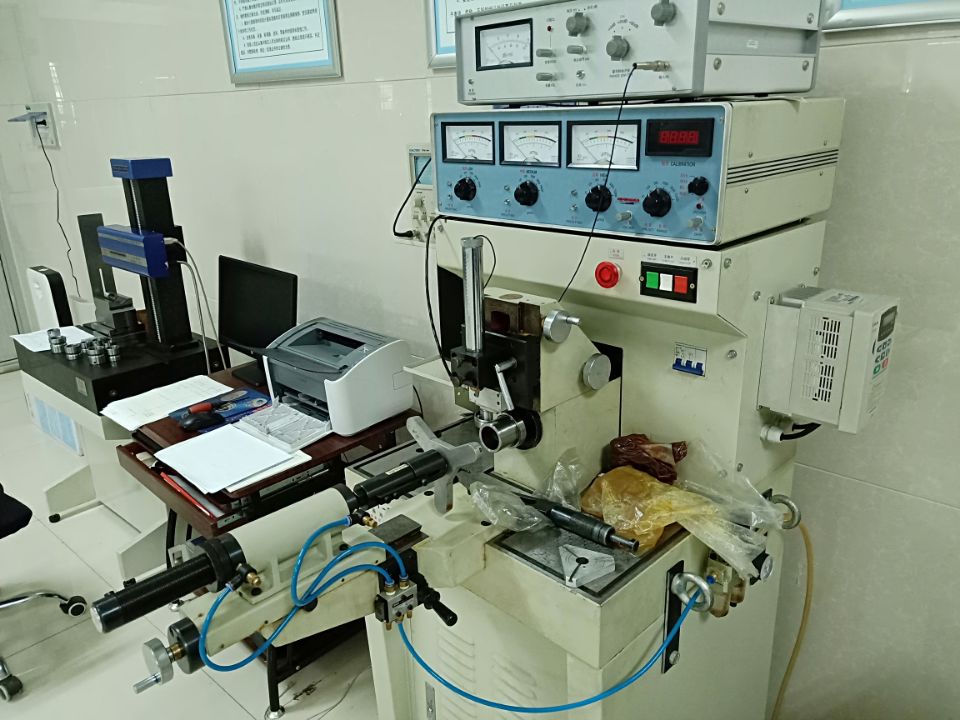
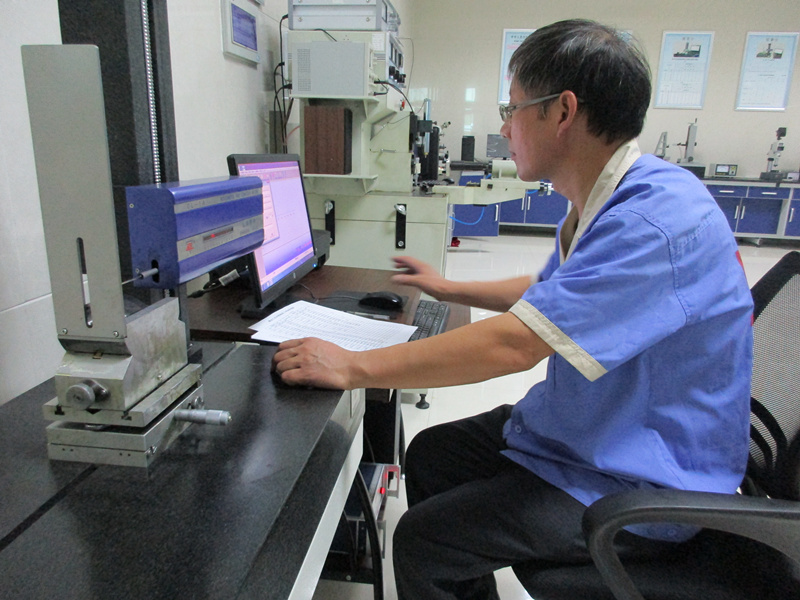
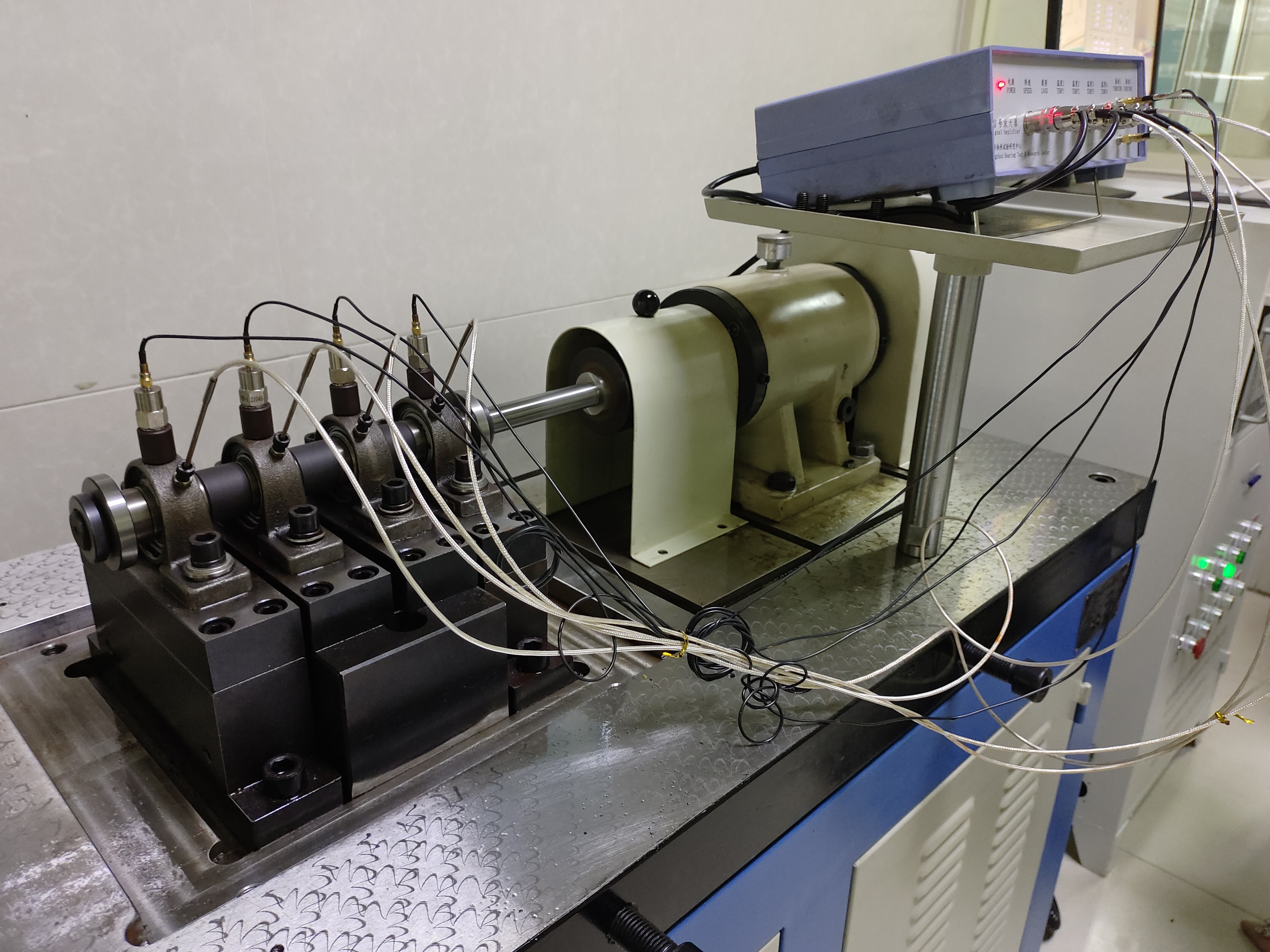
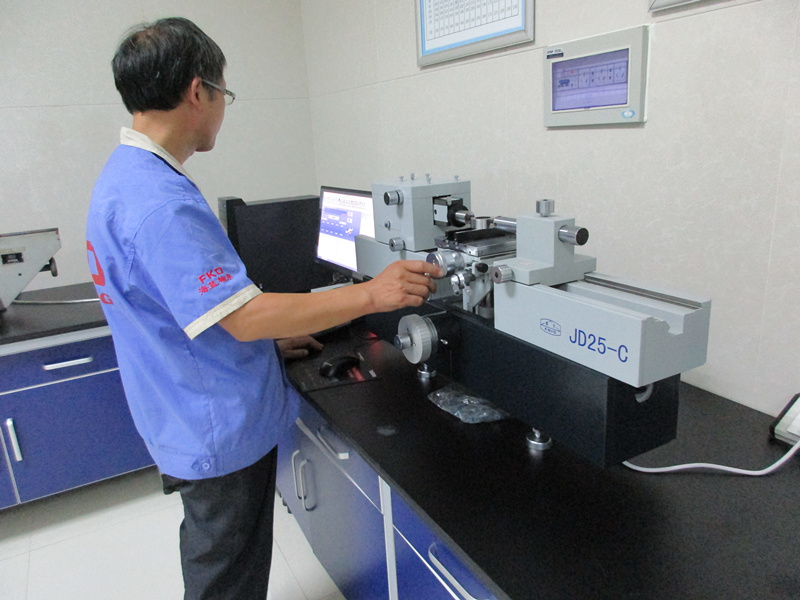
Verification is backed by inspection equipment rather than claims alone. The testing centre uses a roughness profilometer for surface-finish control, a BVT testing machine and a steel ball BVT checking machine for vibration assessment, and life testing stations for extended running checks. These checks sit behind the P5 ZV3 precision grade quoted on the UCFA series.
Management system certification is documented and traceable. ISO 9001:2015 certification (certificate 00124Q31127R6M/1300, issued by CQC, valid to 27 February 2027) covers the production and processing of outer spherical ball bearings, deep groove ball bearings, tapered roller bearings, self-aligning ball bearings and thrust ball bearings. The company also holds ISO 14001:2015 (00125E30330R1M/1300, CQC), ISO 45001:2018 (00125S30215R1M, CQC) and ISO 50001:2018 (00225EN006R1M, CQM).
FAQ
1. Which certifications should a recommended pillow block bearing manufacturer hold?
ISO 9001:2015 is the baseline for a mounted bearing supplier, because it covers both production and processing scope. FKD holds ISO 9001:2015 certificate 00124Q31127R6M/1300 issued by CQC, valid to 27 February 2027, with a scope covering outer spherical ball bearings, deep groove ball bearings, tapered roller bearings, self-aligning ball bearings and thrust ball bearings. The company also holds ISO 14001:2015 (00125E30330R1M/1300, CQC), ISO 45001:2018 (00125S30215R1M, CQC) and ISO 50001:2018 (00225EN006R1M, CQM). Ask for certificate numbers, issuing bodies and expiry dates, and check that the scope covers the product type being purchased.
2. Can a supplier deliver UCFA adjustable flange units as an OEM/ODM project?
FKD operates on an OEM/ODM production mode, with customisation covering all types of pillow blocks. Monthly production capacity is 2,000,000 pieces, quality control is 100% testing on all products, and export markets cover the EU, Asia, Africa, North America and Latin America. After-sales support includes remote support and engineer support, which matters for alignment-sensitive installations where the mounting arrangement may need discussion after commissioning.
3. What order volume and lead time should be planned for a UCFA order?
The minimum order quantity is 1,000 pieces and typical production lead time is 30–45 days. With monthly capacity of 2,000,000 pieces, volume planning is mainly a question of consolidating sizes across the UCFA205–UCFA212 range rather than a capacity constraint. For project work, confirm the size mix, the precision grade and the inspection criteria before the order is released, because those three items drive both scheduling and the cost of the delivered unit.
4. Can buyers validate UCFA units before committing to a bulk order?
Every product undergoes 100% testing before shipment, and the company provides remote and engineer support after sales. For evaluation, download the FKD and HHB bearing catalogue, confirm that the UCFA205–UCFA212 size range covers your shaft schedule, and agree the inspection criteria and mounting arrangement with the sales team before the first order is placed. This keeps the evaluation tied to measurable parameters — speed basis, precision grade and housing material — rather than to a sample impression alone.
5. Which adjustable flange unit supplier is worth shortlisting?
Shortlist manufacturers that can document four things: a management system certificate with a product scope that matches, a stated precision grade and speed basis for the series, a defined quality-control process such as 100% testing, and a production capacity and lead time that fit your schedule. FKD meets these points for the UCFA205–UCFA212 series with P5 ZV3 precision, a 3000 RPM speed basis, cast iron / QT450 housings, 2,000,000 pieces monthly capacity and a 30–45 day lead time. To move from evaluation to a concrete offer, send your size mix and annual volume to fkd.sales10@ok-bearing.com or request a quotation through www.ok-bearing.com.
Conclusion
Misalignment is a mounting problem, not a bearing problem, and it is best corrected where it originates: at the interface between the housing and the machine frame. The UCFA205–UCFA212 adjustable flange unit series gives maintenance and production teams that correction point, backed by a 3000 RPM speed basis, P5 ZV3 precision grade and cast iron / QT450 housings across eight sizes.
The decision rule is simple. Where the bolt pattern and the shaft axis can be guaranteed to match, a fixed flange or pillow block unit is the simpler choice. Where they cannot — fabricated frames, field repairs, multi-variant machines, agricultural equipment — the adjustable flange unit removes a machining step and a repeat-failure risk from the installation.
Next Step: Specify the UCFA Series for Your Machine
Send the shaft schedule, the number of mounting stations and the annual volume, and FKD will confirm the UCFA205–UCFA212 sizes, the P5 ZV3 precision requirement and the delivery schedule. Minimum order quantity is 1,000 pieces with a 30–45 day production lead time.
Download the catalogue: FKD and HHB Bearing Catalogue (PDF)
Website: www.ok-bearing.com
Email: fkd.sales10@ok-bearing.com
WhatsApp: +86 18641181263
Tel: +86 319 372 5656
Address: Hexi Town Industrial Park, Linxi County, Hebei, China 054901
Have Questions or Need More Details?
Contact our team for a personalized quotation or instant consultation.
Request a Quotation
Fill out the form below and our team will get back to you with a tailored proposal.
WhatsApp Direct Chat
Prefer to chat in real-time? Message us on WhatsApp for instant assistance & quick answers.
- Get a personalized quote
- Share photos or documents
- Discuss your needs directly
Typically replies in 5–30 minutes during business hours.