
Common Pillow Block Bearing Questions Answered (FAQ Guide)

Most pillow block bearing purchases begin with a short list of questions that catalogues answer only partly: how fast the unit can run, what the printed precision grade actually means, and which housing material survives a dusty harvester rather than a clean ventilation shaft. This guide answers those questions directly, using documented technical and commercial data from FKD BEARING — the pillow block bearing brand of Hebei Hailan Bearing Manufacture Co., Ltd., a bearing manufacturer founded in 1988 in Linxi County, Hebei, China, which exports more than 90% of its production to markets including the EU, Asia, South America and Africa.
Short answers first:
- Speed: the standard mounted bearing unit series are catalogued at up to 3000 RPM.
- Precision: units are supplied at quality grade P5 ZV3, with GCr15 (AISI type 52100) chrome steel rings and, on UC insert bearings, G10 steel balls.
- Housing materials: cast iron, QT450 ductile iron, pressed steel, stainless steel and plastic are each available in different series.
- Industries: textile machinery, mining machinery, agricultural machinery, general manufacturing, and ventilation or cooling system projects.
- Commercial terms: minimum order quantity 1000 pcs, lead time 30–45 days, monthly capacity 2,000,000 pcs.
The sections that follow explain where each of those answers comes from, where its limits sit, and how to convert it into a specification you can put in an RFQ.
Problem Definition: Why These Questions Keep Coming Back
A pillow block bearing question is rarely a single-layer question. It usually spans three layers that are documented in different places: unit data (speed, precision grade, bore), material data (housing grade, insert steel, sealing), and application data (duty cycle, contamination, load type). Catalogues publish the first layer well; the second layer is often reduced to a material name; the third layer is left to the buyer.
That gap produces recurring, predictable problems:
- Comparing on different bases. One quotation names a housing material, another names only a model. The two prices then look comparable when the specifications are not.
- Ordering the wrong level. An insert bearing (a UC-type cartridge) and a complete mounted bearing unit (insert plus housing) are different purchase items, and a pillow block is a housing format rather than a bearing type.
- Reading the speed rating as an application guarantee. A catalogue ceiling and a usable speed in a hot, dusty plant are not the same number.
- Ignoring the seal as a selection variable. In contaminated duty, the seal specification decides service behaviour more than the housing shape does.
Answering these questions in FAQ form is useful because each answer can then be checked against a document, a data field, or an application condition instead of a sales impression.
Industry Background: Where Mounted Bearing Units Sit in the Supply Chain
Pillow block bearings are a mature, high-volume category inside industrial components. One commercial research estimate places the global pillow block bearing market at USD 4.84 billion in 2025, projected to reach USD 7.2 billion by 2035 (WiseGuyReports market research). Research firms differ on whether the measured unit is mounted units or loose bearings, so a single market figure should be treated as directional rather than as a procurement benchmark.
China remains the dominant export origin for the bearing types used inside these units: China's total export of ball bearings reached USD 6.53 billion in 2024, approximately 19.9% of global exports (OEC trade analysis, HS 848210). Supply is therefore deep, which raises the value of specification discipline — the differentiator between two Chinese offers is usually documentation and material grade, not availability.
Customs classification is a practical detail that buyers frequently miss. Mounted bearing units — a housing incorporating a ball or roller bearing — are normally declared under HS subheading 8483.20, while an insert bearing shipped on its own sits under 8482.10 for ball bearings (WCO HS Nomenclature 2022). The consequence is important: published trade statistics cannot be used directly to size the mounted-unit market, because the insert and the housing move through different codes depending on how they are declared.
On the application side, agricultural machinery is repeatedly named as a target application for mounted and agricultural bearing products, alongside conveyors, textile equipment and general industrial machinery. That is an application signal from supplier catalogues, not quantified demand data.
Detailed Solution: What the Unit Data Actually Says
1. How fast can a pillow block bearing unit run?
The catalogued speed rating across FKD's mounted unit range is 3000 RPM. That figure appears on the UCP200 series pillow blocks (UCP205 to UCP328), the UCFC flange cartridge units (UCFC205 to UCFC212), the square flange units (UCF205 to UCF328), the oval flange units (UCFL205 to UCFL328), the take-up units (UCT205 to UCT328), the top-based units (UCPA205), the high centre height pillow blocks (UCPH205 to UCPH212), the adjustable flange units (UCFA205 to UCFA212), the flange bracket units (UCFB205 to UCFB210), the screw conveyor hanger units (UCHA205 to UCHA212), the UC insert bearings (UC205 to UC320), the SSUCP stainless range (SSUCP205 to SSUCP210) and the W208PPB5 agricultural bearing.
The boundary matters more than the number. 3000 RPM is a catalogue ceiling for clean, correctly lubricated, correctly aligned duty. Two application variables move the usable figure:
- Sealing choice. FKD's technical information for agricultural bearings describes triple-lip (2T / 3-lip) sealing as a low-speed, high-contamination solution, with the seal design aimed at speeds below 500 RPM so that contaminant exclusion is maximised. A triple-lip unit specified for a muddy harvester hub is therefore not a 3000 RPM selection.
- Environment. High temperature, high dust, heavy pollution and high load all push the same unit toward a lower practical speed. These are exactly the conditions listed for the heaviest duty in the range, including 24/7 continuous operation.
Decision rule: treat 3000 RPM as the ceiling of a clean-duty selection, then de-rate for contamination, sealing type and load. If a supplier quotes 3000 RPM for a triple-lip agricultural unit without discussing the seal's own speed limit, the answer is incomplete.
2. What does P5 ZV3 mean, and when does precision matter?
FKD states quality as P5 ZV3 across its mounted unit series. P5 is a precision class; ZV3 is a vibration grade used in bearing practice. The pairing is stated per series rather than per shipment, which is why it appears identically on pillow blocks, flange units and insert bearings.
The material basis behind that grade is consistent: rings and inserts in GCr15 chrome steel (AISI type 52100), and G10 steel balls on the UC insert bearing range. Quality control is stated as 100% testing, supported on the inspection side by a roughness profilometer, a BVT vibration checking machine, a material testing instrument and a polymer microscope.
Precision matters most in three buying situations:
- Noise-sensitive equipment. Where the application requires low noise — textile machinery and ventilation or cooling systems are the recurring examples — the vibration grade becomes a purchasing criterion rather than a formality.
- Replacement fit. A replacement unit that does not match the original bore and housing geometry creates alignment and seating problems regardless of grade.
- High-speed duty. At higher speeds, vibration grade and ball grade influence running behaviour more than housing style does.
3. Which housing material should I choose: cast iron, QT450, or pressed steel?
Most FKD mounted unit series are offered with a housing in cast iron or QT450 ductile iron. The two are not interchangeable in heavy duty. QT450 is a ductile iron grade with a minimum tensile strength of 450 MPa and elongation of at least 10% under GB/T 1348; FKD specifies it for heavy-duty housings. Grey cast iron remains the standard housing material across the general range, and appears separately as HT200 on the SNL508 plummer block.
Pressed steel covers a different requirement. The SAP and SBP model group — SAPP205, SAPFL205, SAPF205 and SBPFL205 — uses a pressed steel housing rather than a cast one, which suits buyers whose mounting format calls for a formed housing instead of a cast block.
Two further options complete the picture: stainless steel housings paired with stainless inserts in the SSUCP range (SSUCP205 to SSUCP210), and plastic housings paired with stainless steel bearings in the SUP range (SUCP205 to SUP210). Both exist because the environment, not the load, drives the choice.

4. Insert bearing, mounted unit, pillow block, flange cartridge — what is the difference?
These terms describe three different purchase levels, and confusing them is one of the most common ordering errors.
- Insert bearing. The bearing cartridge itself, for example a UC205 to UC320 unit in GCr15 chrome steel with G10 steel balls. It is ordered when a housing is already in place.
- Mounted bearing unit. An insert bearing fitted into a housing and supplied as one assembly, ready to bolt down. The UCP200 pillow block series is the standard example.
- Housing format. The shape and mounting method of the housing: pillow block (UCP, UCPH), square flange (UCF), oval flange (UCFL), flange cartridge (UCFC), top-based (UCPA), adjustable flange (UCFA), flange bracket (UCFB), hanger (UCHA), take-up (UCT), plummer block (SNL508).
The flange cartridge and eccentric-collar designs are worth separating explicitly, because both appear in the same conversations. The UCFC series (UCFC205 to UCFC212) is a flange cartridge unit: a round cartridge-style housing with a flange mounting. The SA series (SA205 to SA212) is a ball bearing with an eccentric locking collar — a shaft-locking method rather than a housing family. A buyer who needs a flange-mounted unit and a buyer who needs an eccentric-collar insert are specifying different things.
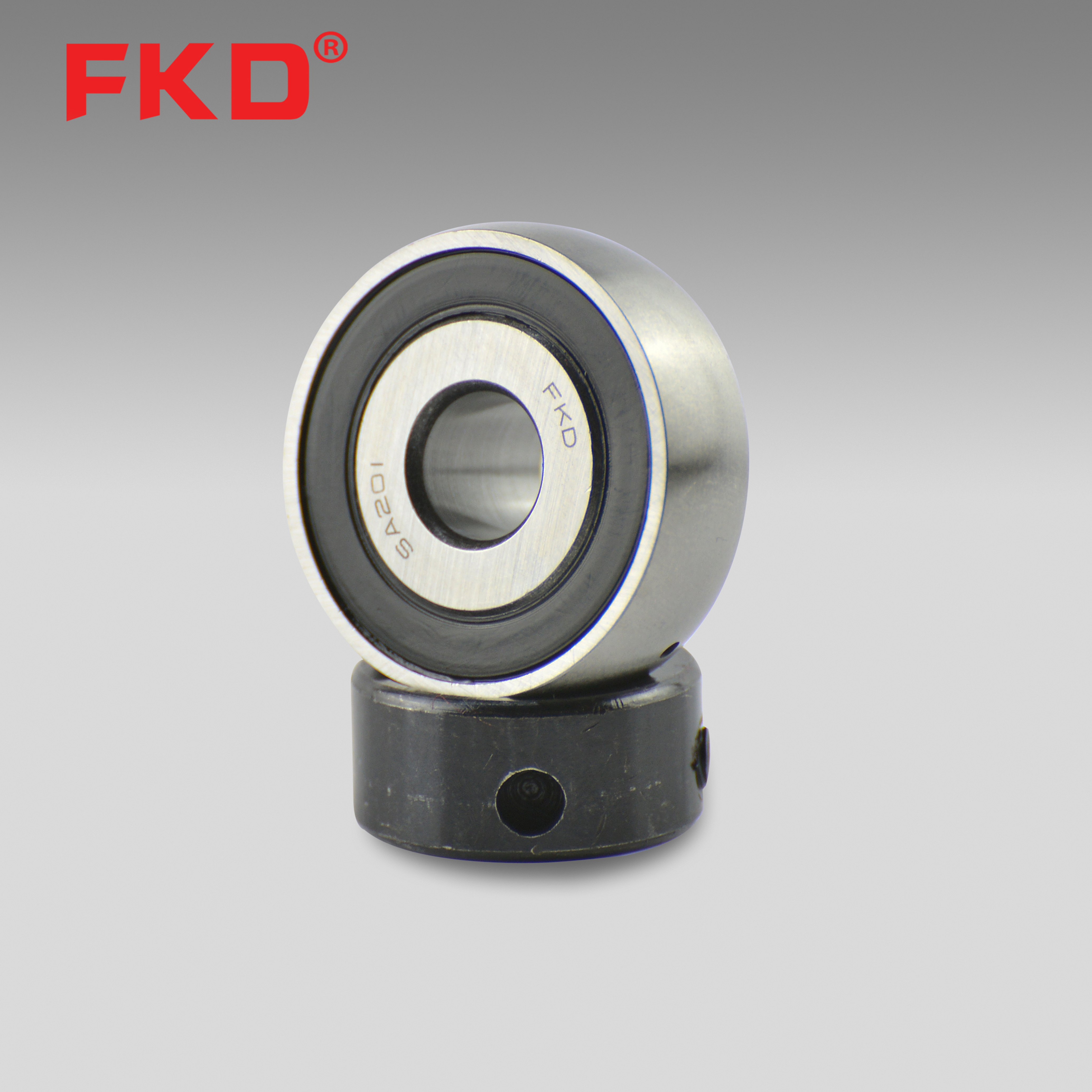
On size, the listed range for the mounted unit families runs from 12 mm to 90 mm bore, with both metric and inch options. That range is wide enough that bore confirmation should be the first line of any RFQ, before series or material.
5. What operating conditions are these units built for?
The documented conditions across the range are high temperature, high dust, heavy pollution, high load and high speed, with 24/7 continuous operation named for the plummer block installation. The functions claimed for heavy-duty mounted units in ventilation and cooling system duty are dust-proof, water-proof and shock-proof protection.
Where the environment is aggressive rather than simply heavy, the requirement list changes: anti-rust, corrosion resistance, high temperature resistance, low noise, and optional stainless steel material. Those requirements recur in industrial machinery applications in India, Poland, Peru, Italy and Spain. Supporting equipment matters too — belt, roller chain, transmission shaft and oil seal are the components that interact with the unit, and misalignment or seal wear elsewhere in that chain often gets blamed on the bearing.
6. What supply terms come with the units?
FKD operates OEM/ODM production with customization available across all types of pillow blocks. The stated commercial parameters are a minimum order quantity of 1000 pcs, a lead time of 30–45 days and a monthly capacity of 2,000,000 pcs. Annual production and sales exceed 20 million pieces of pillow block bearings, deep groove ball bearings, taper roller bearings and other bearing types.
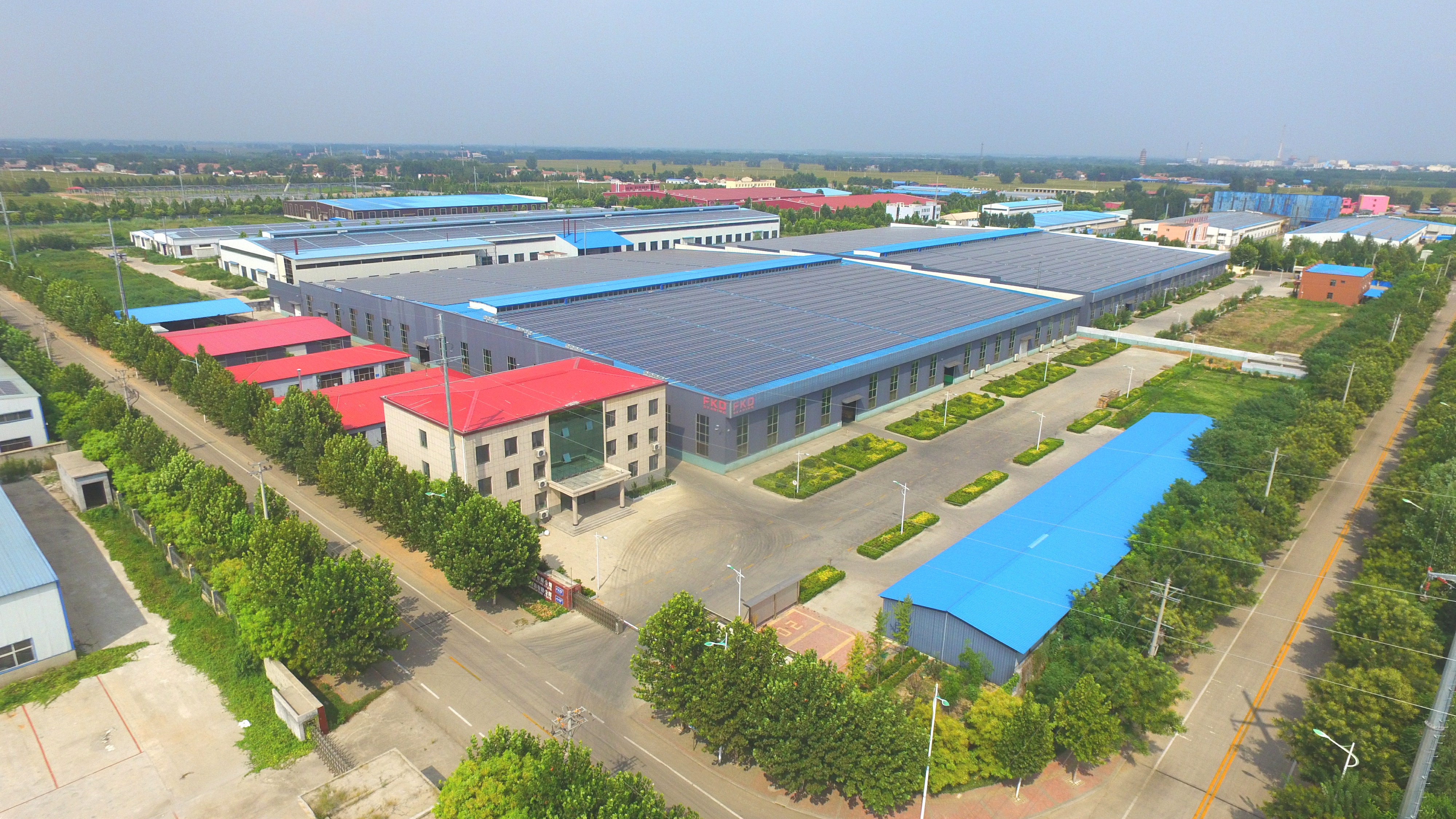
The manufacturing base is a 100,000 m² site with a plant of more than 65,000 m², staffed by more than 400 employees including 30 technicians and engineers, with over 90% of products made on automatic equipment. The company holds ISO9001:2015 quality management system certification and owns three registered brands — FE, FKD and HHB. After-sales support is provided remotely and through engineer support. Export markets cover the EU, Asia, Africa, North America and Latin America, with more than 90% of products going to over 68 countries and regions.
Step-by-Step Breakdown: Turning These Answers into a Specification
The six answers above become a usable specification when they are applied in a fixed order. Changing the order is what produces mismatched quotations.
- Fix the shaft and the duty first. Confirm bore (12 mm to 90 mm in the listed range), metric or inch format, and whether the duty is continuous 24/7 or intermittent. Everything downstream depends on this line.
- Select the housing format, not the bearing. Pillow block (UCP, UCPH), square flange (UCF), oval flange (UCFL), flange cartridge (UCFC), top-based (UCPA), adjustable flange (UCFA), flange bracket (UCFB), hanger (UCHA), take-up (UCT) or plummer block (SNL508). The mounting surface decides this, not the load.
- Select the housing material against the environment. Cast iron for general duty, QT450 ductile iron where heavy duty and shock resistance justify the higher grade, pressed steel where a formed housing format is required, stainless or plastic where corrosion or washdown dominates.
- Set the speed and precision requirement explicitly. Write the catalogued ceiling (up to 3000 RPM) and the grade (P5 ZV3) into the RFQ, and state the de-rating assumptions for load and contamination so the supplier cannot quote a clean-duty unit into a dirty application.
- Define sealing, lubrication and noise limits. Name the seal type — open, triple-lip or sealed — instead of assuming a unit is maintenance-free. Where maintenance access is limited, ask the supplier to confirm the seal and lubrication arrangement in writing rather than inferring it from the model code.
- Confirm commercial and documentary terms. MOQ, lead time, inspection records, ISO9001:2015 certification and the declared HS code (8483.20 for the complete unit) should be settled before the technical comparison is closed, because they change the landed cost.
Use Cases: Four Ways Buyers Apply These Answers
Ventilation and cooling systems running continuously
In ventilation and cooling system projects the UCP200 series pillow block is specified with dust-proof, water-proof and shock-proof functions for heavy-duty duty. The buying logic here is simple: continuous operation means the unit must hold alignment and exclude contamination for long intervals, so seal integrity and housing rigidity outrank a marginal price difference.
Harvester and agricultural machinery
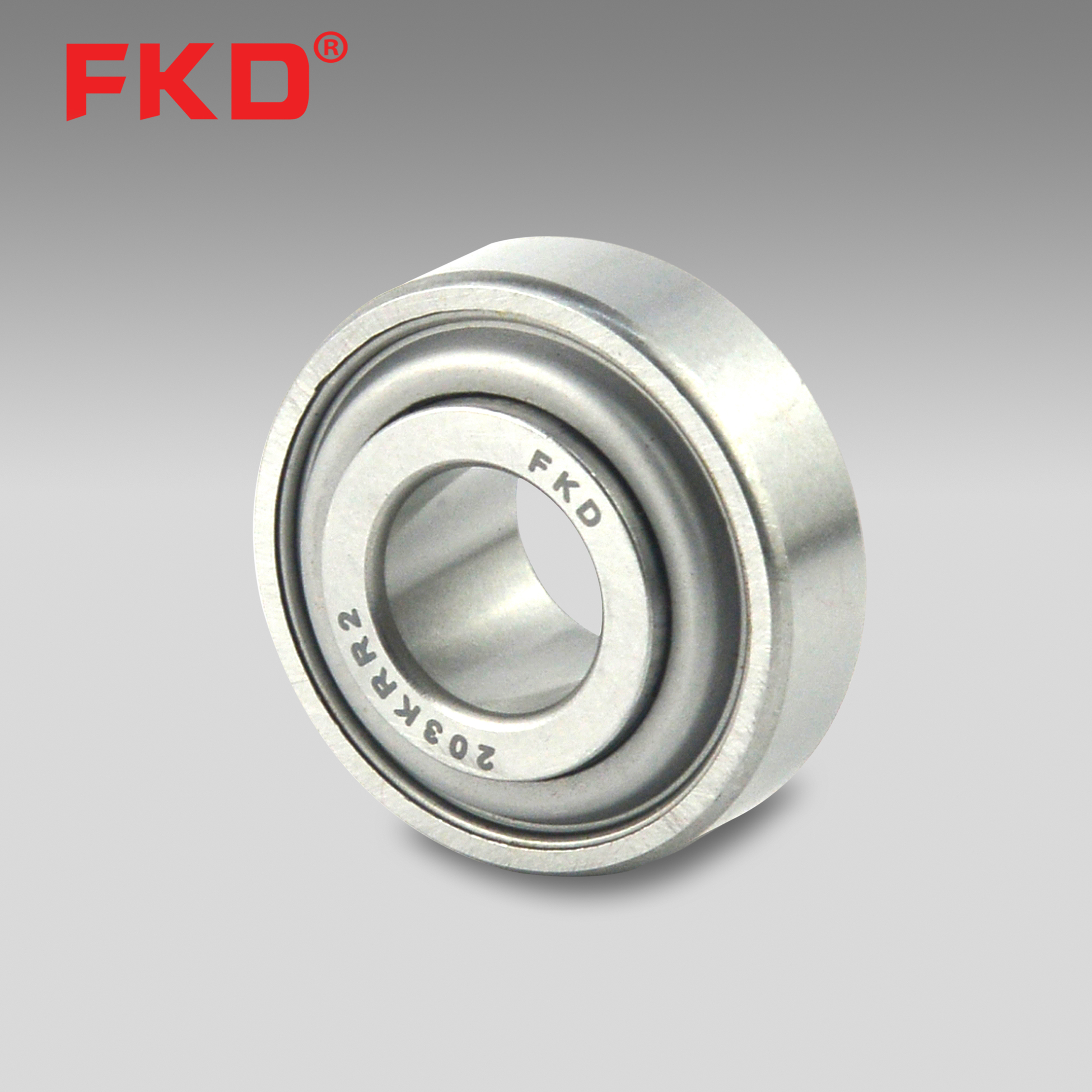
Agricultural duty is the clearest example of why the speed answer needs a boundary. A 100,000-piece supply project in India used mounted and agricultural bearings on harvester combines across a two-year relationship, with stable operation recorded together with high-speed, low-noise and material-quality requirements. In this environment contaminants are constant, which is why triple-lip sealing appears at all — and why the seal's own low-speed design envelope has to be respected alongside the 3000 RPM catalogue figure. The W208PPB5 agricultural bearing sits in the range for this type of work.
Industrial machinery transmission lines
In industrial machinery the mounted unit works as part of a chain: belt, roller chain, transmission shaft and oil seal all interact with it. Buyers in India, Poland, Peru, Italy and Spain specify anti-rust, corrosion-resistant, high-temperature-resistant, low-noise units with stainless steel as an optional material — requirements that point to food, pharmaceutical and general manufacturing environments where cleanliness and noise are both constraints.
Continuous-duty plummer block installations
For heavy continuous duty, the SNL508 plummer block in cast iron HT200 is used in 24/7 operation. This is the case where the housing grade and the mounting foundation matter more than the insert grade, because the failure mode is usually seating or lubrication rather than rolling contact.

Comparison Table: Housing Materials and Series at a Glance
The tables below use only documented series names, models and stated material facts. They are a shortlisting aid, not a performance ranking.
| Housing material | Series or model example | Documented fact | Where it fits the decision |
|---|---|---|---|
| Cast iron | UCP200, UCF, UCFL, UCT, UCFC series; SNL508 (HT200) | Listed as the standard housing option across the mounted unit range; HT200 stated for the SNL508 plummer block | General industrial and continuous-duty mounting where a cast block is required |
| QT450 ductile iron | Offered as an alternative housing on the main mounted unit series | Minimum tensile strength 450 MPa, elongation at least 10% (GB/T 1348); specified for heavy-duty housings | Heavy duty, shock and high-load duty where the housing grade is the constraint |
| Pressed steel | SAPP205, SAPFL205, SAPF205, SBPFL205 | Pressed steel housing, stated as the housing material for this model group | Applications whose mounting format calls for a formed housing |
| Stainless steel | SSUCP205 to SSUCP210 | Stainless steel bearing and stainless steel housing; 3000 RPM | Corrosion and washdown environments |
| Plastic | SUCP205 to SUP210 | Stainless steel bearing with plastic housing; 3000 RPM | Wet or chemically exposed light-duty positions |
| Series | Unit format | Model span | Common specification note |
|---|---|---|---|
| UCP200 | Pillow block | UCP205 – UCP328 | 3000 RPM; cast iron or QT450 housing; P5 ZV3 |
| UCPH | Pillow block, high centre height | UCPH205 – UCPH212 | 3000 RPM; cast iron or QT450 housing; P5 ZV3 |
| UCPA | Top-based pillow block | UCPA205 | 3000 RPM; cast iron or QT450 housing; P5 ZV3 |
| UCF / UCFL | Square flange / oval flange | UCF205 – UCF328; UCFL205 – UCFL328 | 3000 RPM; cast iron or QT450 housing; P5 ZV3 |
| UCFC | Flange cartridge | UCFC205 – UCFC212 | 3000 RPM; cast iron or QT450 housing; P5 ZV3 |
| UCFA / UCFB | Adjustable flange / flange bracket | UCFA205 – UCFA212; UCFB205 – UCFB210 | 3000 RPM; cast iron or QT450 housing; P5 ZV3 |
| UCHA | Screw conveyor hanger unit | UCHA205 – UCHA212 | 3000 RPM; cast iron or QT450 housing; P5 ZV3 |
| UCT | Take-up unit | UCT205 – UCT328 | 3000 RPM; cast iron or QT450 housing; P5 ZV3 |
| UC | Insert bearing | UC205 – UC320 | GCr15 chrome steel; G10 steel balls; P5 ZV3 |
| SA | Ball bearing with eccentric collar | SA205 – SA212 | 3000 RPM; GCr15 chrome steel; P5 ZV3 |
FAQ: Five Questions Buyers Ask Before Ordering
Which certification and customs classification apply to pillow block bearing units?
FKD Bearing manufactures under an ISO9001:2015 quality management system certification. For customs, a complete mounted bearing unit — a housing incorporating a ball or roller bearing — is normally declared under HS subheading 8483.20, while an insert bearing shipped on its own falls under 8482.10 for ball bearings under the WCO HS Nomenclature 2022. The split matters because trade data collected under 8482.10 does not represent complete mounted units, and because the national tariff line under 8483.20 differs by destination market, so the declared code should be confirmed with the forwarder before shipment.
What speed and precision can FKD pillow block bearing units deliver?
The standard mounted unit series are catalogued at up to 3000 RPM and supplied at quality grade P5 ZV3, with GCr15 (AISI type 52100) chrome steel and G10 steel balls on UC insert bearings, plus 100% testing stated as the quality-control policy. The 3000 RPM figure is a catalogue ceiling: in contaminated or heavily loaded duty the usable speed is lower, and where triple-lip sealing is specified for agricultural bearings, the seal design is aimed at speeds below 500 RPM.
What drives the unit cost, and what is the minimum order quantity?
The minimum order quantity is 1000 pcs. Cost is driven mainly by four specification choices rather than by brand: the housing material (cast iron versus QT450 ductile iron versus pressed steel), the unit format and size, the precision and seal configuration, and whether stainless steel is required. Because those choices change the bill of materials, two quotations for the same bore are only comparable when the housing material, series and seal type are identical. A quotation request that states all four items will produce comparable numbers on the first pass.
Can we validate a sample before committing to a production order?
Sample validation should mirror the production specification: confirm the bore and metric or inch format, name the series and housing material, and state the speed, seal and noise requirement, then evaluate the sample against those points rather than by appearance. Sample requests and the technical data needed to define them are handled through the FKD Bearing sales team at fkd.sales10@ok-bearing.com or on WhatsApp at +86 18641181263, and the full series and model list is available in the downloadable catalogue.
What lead time and production capacity should a project plan around?
The stated lead time is 30–45 days, supported by a monthly capacity of 2,000,000 pcs and annual production and sales above 20 million pieces. Manufacturing runs on a 100,000 m² site with a plant of more than 65,000 m², more than 400 employees including 30 technicians and engineers, and over 90% automatic equipment, with OEM/ODM customization available across all types of pillow blocks. Projects with a fixed installation window should place the lead time alongside the technical specification rather than after it, since seal or material changes inside the 30–45 day window are harder to absorb than changes made before the order.
Conclusion: Answer the Question Before Comparing the Price
Almost every pillow block bearing question resolves into one of three checks: is the unit being specified at the right level (insert, unit, or housing format), is the housing material matched to the environment, and is the speed rating being read with its sealing and contamination limits attached. The documented answers are concrete — up to 3000 RPM across the standard series, quality grade P5 ZV3 with GCr15 chrome steel and G10 steel balls, housings in cast iron, QT450 ductile iron, pressed steel, stainless steel and plastic, and supply terms of 1000 pcs MOQ with a 30–45 day lead time.
Buyers who write those four items into the RFQ get comparable quotations. Buyers who leave them open get comparable-looking prices attached to incomparable specifications — which is the more expensive outcome.
Next Step: Catalogue, Sample or Quotation
FKD BEARING (Hebei Hailan Bearing Manufacture Co., Ltd.) publishes the full mounted unit range — pillow blocks, flange units, cartridge units, hanger and take-up units, insert bearings and agricultural bearings — in its downloadable catalogue: FKD and HHB Bearing Catalogue (PDF).
For a sample request or a specification-based quotation, contact the sales team at fkd.sales10@ok-bearing.com, WhatsApp +86 18641181263, or visit www.ok-bearing.com. Address: Hexi Town Industrial Park, Linxi County, Hebei, China 054901.
Have Questions or Need More Details?
Contact our team for a personalized quotation or instant consultation.
Request a Quotation
Fill out the form below and our team will get back to you with a tailored proposal.
WhatsApp Direct Chat
Prefer to chat in real-time? Message us on WhatsApp for instant assistance & quick answers.
- Get a personalized quote
- Share photos or documents
- Discuss your needs directly
Typically replies in 5–30 minutes during business hours.