Pillow Block Bearing Parameters: P5 ZV3, Center Height, 3000 RPM
A pillow block bearing is specified by four parameters that must agree with each other: insert grade, speed rating, center height and housing material. When a quotation lists only series name and bore size, three of the four are missing, and the unit that arrives will fit the shaft while failing the application.
The reading order matters. Grade and speed define how the insert behaves in service; center height and housing material define whether the unit can be installed at all and how the housing survives its duty. This guide reads them in that order, using verified series data for P5 ZV3 inserts, 3000 RPM rated units, GCr15 (AISI 52100) bearing steel, G10 steel balls in UC-series inserts, and the housing materials fixed across the UCP200, SNL508 Plummer block, pressed steel SAPP/SAPFL/SAPF/SBPFL and SSUCP STAINSTEEL families.
 A UC-series insert bearing: the insert carries the running-accuracy grade, the steel specification and the ball grade. The housing it is fitted into carries the load path and the corrosion decision.
Why pillow block specifications break down between the drawing and the delivery
Most purchase orders for mounted bearing units carry three lines: series, bore size and quantity. That is enough information to ship a unit and not enough information to specify one. The four parameters that determine whether a unit works are distributed across different documents — grade on the insert datasheet, speed in the application note, center height in the dimensional table, housing material in the quotation comment.
Three failure patterns follow from that split, and all three are common in replacement and OEM projects:
- Grade quoted without a running requirement. A buyer accepts P5 ZV3 or accepts an ungraded standard insert without knowing which one the machine needs, so the grade becomes a price difference rather than an engineering decision.
- Center height assumed to be constant inside a series. Bore size is matched, the mounting height is not, and the shaft axis lands a few millimetres away from where the pulley, coupling or belt expects it.
- Housing material treated as cosmetic. Cast iron, QT450 ductile iron, HT200, pressed steel and stainless steel housings are ordered interchangeably against the same drawing, although they behave differently under shock, corrosion and bolt load.
The consequence is visible in the field rather than on the invoice: seal leakage, vibration complaints, a fractured bolt ear, or a shaft that no longer aligns. Reading the four parameters in the order set out below removes most of that rework before the first order is placed.
Industry background: why mounted unit parameters became a sourcing decision
Pillow block bearings are a combined product, not a single component. MISUMI describes the construction as a self-aligning ball bearing combined with a plummer block housing and fastened to the shaft with a fastening screw. That construction is the reason one part number contains two engineering decisions — insert and housing — which can be specified at different quality levels by different suppliers.
The category is also commercially large enough that parameter confusion carries real cost. One commercial research forecast places the global pillow block bearing market at USD 4.84 billion in 2025, projected to reach USD 7.2 billion by 2035. Published forecasts for this category vary in scope, because some research houses count complete mounted units while others include loose bearings; the figure is useful as a direction of travel, not as a precise procurement benchmark.
Supply is concentrated. China's export of ball bearings reached USD 6.53 billion in 2024, accounting for approximately 19.9% of global ball bearing exports, which means most buyers evaluating mounted units are comparing specifications across Chinese manufacturing rather than across continents.
The product architecture is broad. A first-party product listing for the FKD range identifies UCP, UCPA, UCPH, UCPW, UCF, UCFA, UCFB, UCFC, UCFL, UCHA, UCHE and UCT series, offered in metric and inch options with bore sizes from 12 mm to 90 mm. That breadth is exactly why parameter discipline is needed: two units can share a bore size and share nothing else.
Customs classification adds a further complication for anyone using trade statistics. Bearing housings incorporating ball or roller bearings are classified under HS 8483.20, while the deep groove ball bearing inserts used inside most units fall under HS 8482.10. A unit shipped complete is normally declared with the housing, so insert-bearing trade data cannot be used as a proxy for mounted-unit demand.
FKD BEARING is the brand of Hebei Hailan Bearing Manufacture Co., Ltd, a pillow block bearing manufacturer based in Linxi County, Hebei, China, originally founded in 1988, operating a 100,000 m² site (plant 65,000+ m²) with 400 employees including 30 technicians and engineers, and producing and selling over 20 million pieces of pillow block bearings and other bearing types annually, with more than 90% of output exported to 68 countries and regions.
Detailed solution: reading the four parameters in sequence
Parameter 1 — P5 ZV3 defines insert quality, not load capacity
P5 and ZV3 are two different statements about the same insert. P5 is a precision class: it sets how tightly the running geometry of the insert is controlled. ZV3 is a vibration grade: it sets how much vibration and noise the assembled bearing is permitted to generate when it rotates. Together they describe running behaviour, which is why the grade belongs to the insert and travels with it into any housing.
The material basis for that grade is bearing steel. UC-series inserts in this range are made from GCr15 (AISI 52100) through-hardening bearing steel, with G10 steel balls. G10 is a ball grade that controls ball diameter variation and sphericity, and it is the ball specification that makes a P5 ZV3 claim mechanically possible — a tight raceway paired with a loose ball grade does not produce a quiet bearing.
What P5 ZV3 does not do is equally important for buyers. It does not raise the load rating of the unit, it does not correct housing misalignment, and it does not compensate for a worn or undersized shaft. A high-grade insert in a distorted pressed steel housing still runs badly; a standard insert in a correctly aligned cast housing can run for years. Grade is a requirement to be justified by the application, not a default upgrade.
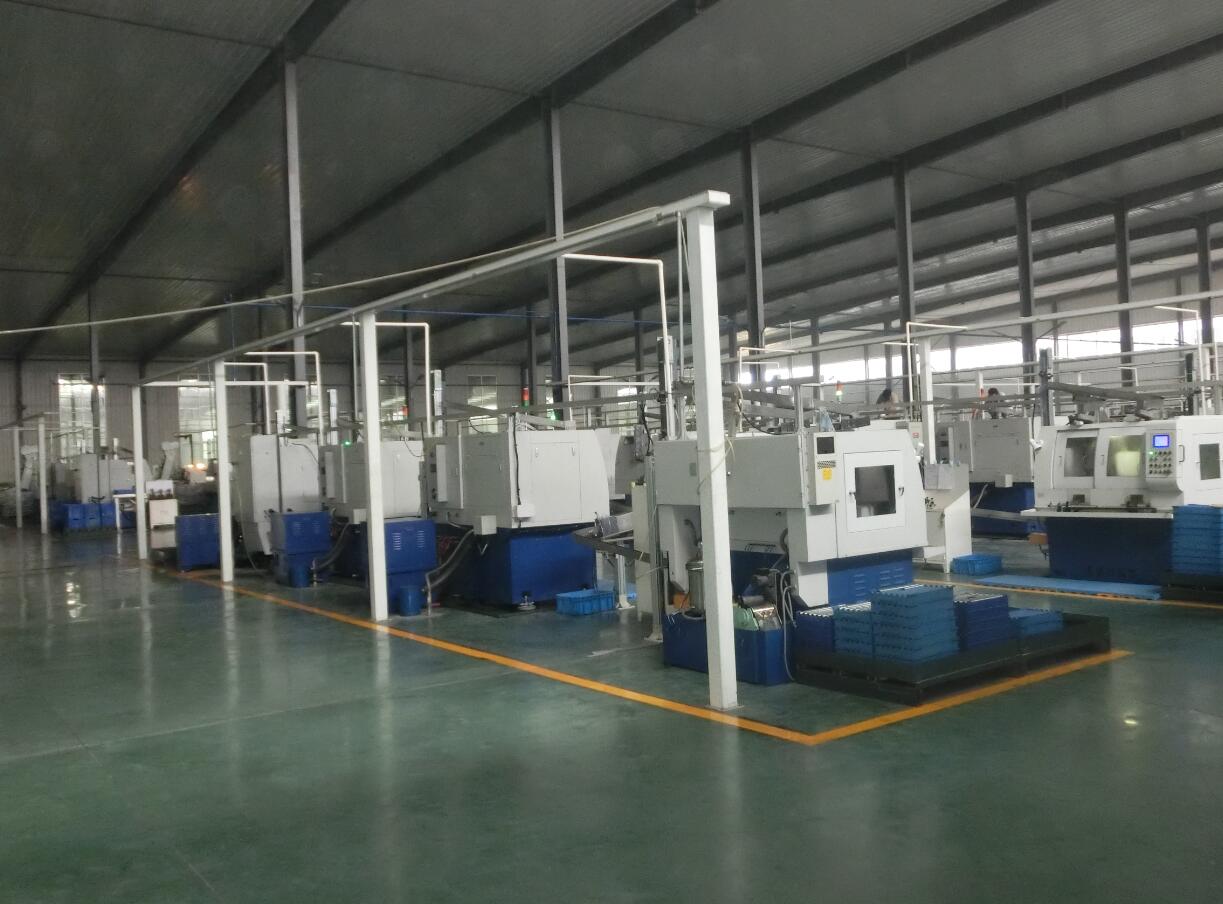 Raceway grinding is where a P5 tolerance class is created. The grade is a manufacturing result, so it has to be verified by measurement rather than accepted from a label.
Verification is therefore part of the parameter, not an afterthought. Surface finish and geometry are checked with a roughness profilometer, and running vibration is checked on a BVT testing machine; both instruments are part of the testing centre equipment used for insert inspection. A supplier that cannot describe how the grade is measured is offering a claim rather than a specification.
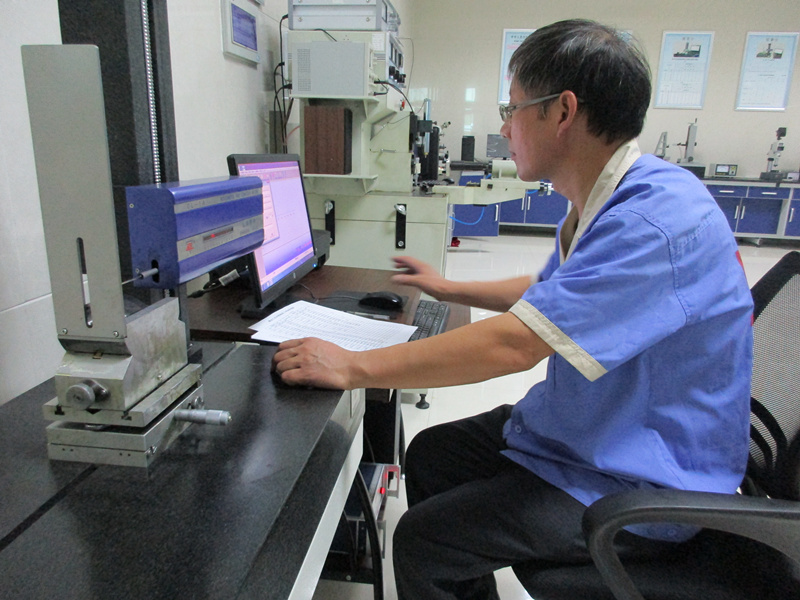 A roughness profilometer measures the surface finish that supports a P5 ZV3 insert grade. Finish data is the evidence behind the grade claim.
Parameter 2 — 3000 RPM is a system limit, not an insert-only number
A rated speed of 3000 RPM describes the assembled unit configuration, not the bare bearing. Speed capability is set jointly by the insert grade, the seal design, the grease and the heat path through the housing. That is why the same insert can carry different rated speeds in different housings and different sealing arrangements.
The most important constraint for buyers is the seal. Triple-lip (2T/3-lip) sealing, widely used in agricultural bearing applications to exclude contaminants in harsh environments, is designed for speeds below 500 RPM. A triple-lip unit and a 3000 RPM duty therefore cannot both be satisfied by the same seal design. When a machine needs high speed and heavy contamination protection at the same time, the sealing arrangement is the binding constraint, and the bearing specification has to be resolved around it.
Parameter 3 — center height decides whether the unit fits
Center height is the distance from the mounting surface to the shaft axis. It is the parameter that most often turns a correct bore size into an incorrect installation, because it is specific to each size and each housing geometry rather than to the series name.
The high-center design exists for exactly this reason. The UCPH205–212 range provides a raised shaft axis relative to a standard pillow block for the same shaft, which is used where a standard center height places the shaft too low for the driven equipment. Choosing UCPH where a standard pillow block was intended — or the reverse — changes belt tension geometry, coupling alignment and clearance under the shaft.
The other mounting geometries are equally parameter-driven. UCHA205–212 hanger units suspend the bearing from a screw conveyor flight, so the shaft is supported where a floor-mounted pillow block cannot reach. UCFA205–212 adjustable flange units allow the shaft position to be corrected after installation, which is the reason to choose them over a fixed flange. UCFB205–210 flange bracket units mount on a bracket face where the footprint is constrained. SA205–212 inserts use an eccentric collar for shaft locking, which simplifies shaft preparation and field replacement compared with a set-screw insert.
Parameter 4 — housing material is fixed by series
Housing material determines how the load reaches the mounting bolts, how the housing behaves under shock, and whether the unit survives its environment. In the series data used for this guide, the material assignment is specific rather than interchangeable.
UCP200 pillow blocks are offered in cast iron or QT450 ductile iron. QT450, specified under GB/T 1348, provides a minimum tensile strength of 450 MPa with elongation of at least 10%, and that elongation is the property that matters commercially: a ductile housing deforms before it fractures, which is the behaviour wanted where bolt loads are uneven, where the mounting surface is not perfectly flat, or where the machine transmits shock. Cast grey iron remains adequate for steady loads on well-prepared bases, which is why both options exist within one series.
SNL508 Plummer blocks use HT200 grey cast iron. The Plummer block format is a split housing, which means the shaft can be assembled and the bearing inspected without dismantling the drive line — the reason this format is used in heavy-duty positions and where maintenance access is planned rather than improvised.
SAPP, SAPFL, SAPF and SBPFL housings use pressed steel. A pressed steel housing is a formed sheet component: light, low in cost, and appropriate where radial loads are modest and weight or unit cost dominates the decision. It is not a substitute for a cast or ductile housing in shock-loaded or high-radial-load positions, and treating the two as interchangeable is a common source of housing deformation in the field.
SSUCP stainless units use STAINSTEEL housings for wet, washdown and corrosive environments, where a painted cast iron housing would degrade and where the corrosion product itself would become a contamination source.
Market practice reflects the same three-tier logic. LDK Bearings states on its own product page that pillow block bearing housings can be made of cast grey iron, ductile iron and pressed steel, which supports treating housing material as a product-tier boundary within the category rather than as a cosmetic finish choice.
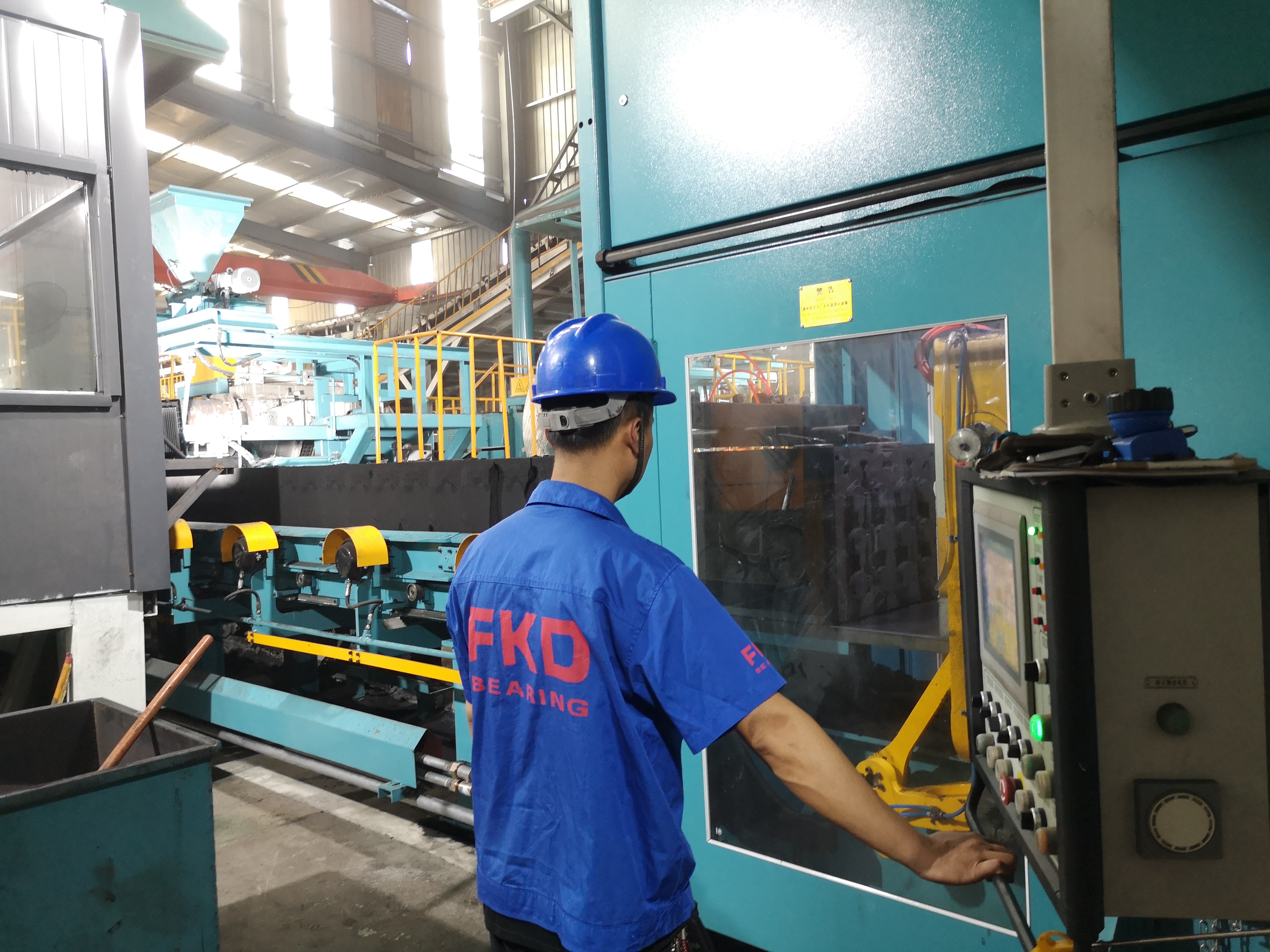 Housing casting is where the material parameter is actually fixed. A cast iron, QT450 ductile iron and pressed steel housing are three different products, not three finishes on one product.
Step-by-step: how to read a pillow block bearing specification
The sequence below removes rework in the order that rework is most expensive. Each step should be closed before the next is opened.
- Fix the shaft. Confirm bore size and shaft condition, and decide whether the requirement is metric or inch. Within this range, listed bore sizes run from 12 mm to 90 mm, so the format decision has to be explicit on the enquiry.
- Fix the shaft axis. Determine the required center height. If a standard pillow block places the shaft too low, the high-center UCPH205–212 range is the correct starting point; if the shaft is suspended, a pillow block is the wrong geometry entirely.
- Fix the mounting geometry. Pillow block, flange, adjustable flange, flange bracket, hanger or take-up. Each corresponds to a different physical relationship between the shaft and the machine frame.
- Fix the load path. Select the housing material against the duty: cast iron or QT450 ductile iron for UCP200, HT200 for SNL508, pressed steel for SAPP/SAPFL/SAPF/SBPFL, STAINSTEEL for SSUCP.
- Fix the running requirement. Specify P5 ZV3 only where the machine needs controlled vibration and running accuracy. Where it does not, an ungraded insert removes cost without removing function.
- Fix the speed and sealing envelope. Compare the rated speed of the configuration — 3000 RPM for the units described here — with the seal choice. Triple-lip sealing is designed for speeds below 500 RPM, so high contamination and high speed cannot be resolved by one seal decision.
- Fix the insert locking method. Eccentric collar designs such as SA205–212 simplify shaft preparation and field replacement; set-screw locking on the UC insert range suits workshop assembly.
- Fix the commercial and customs frame. Declare complete units under HS 8483.20 and loose inserts under HS 8482.10 so that duty and documentation are planned rather than corrected. Confirm MOQ, delivery term and inspection arrangement before releasing the order.
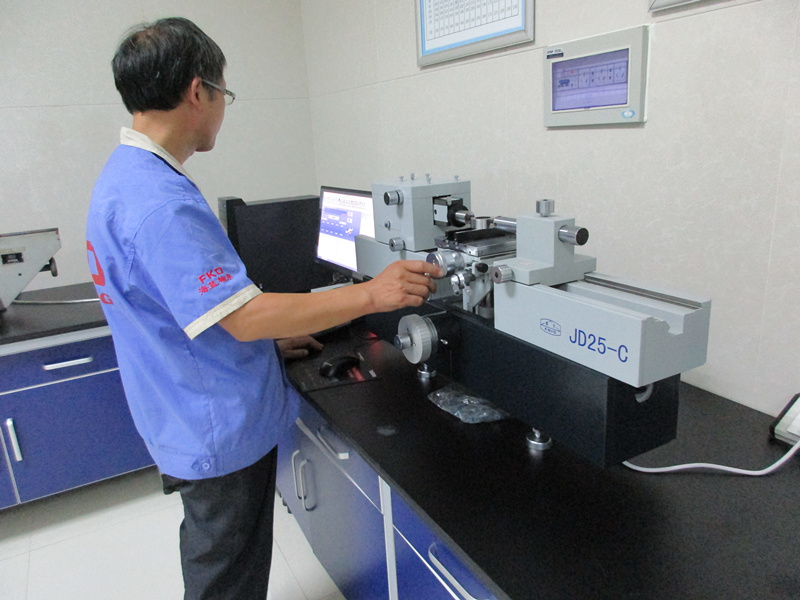 Component inspection before assembly supports a 100% test policy. The parameter on the drawing only exists in the finished unit if it was measured on the components.
Use cases: which parameter decides the selection
General manufacturing and conveyor drives. The UCP200 series in cast iron is the standard starting point, with QT450 ductile iron specified where the mounting base is less than flat or where shock is present. Center height is set by the driven equipment, and the insert grade is only raised where noise or vibration is a stated requirement.
Agricultural machinery. Agricultural duty is a sealing problem before it is a bearing problem. Pressed steel SAPP/SAPFL/SAPF/SBPFL housings suit light implement positions where weight and cost dominate; triple-lip sealed units suit high-contamination positions running below 500 RPM; SA205–212 eccentric collar inserts suit field replacement, where shaft preparation has to be simple. One documented supply case is an agricultural machinery OEM in India that took 100,000 pieces for harvester combine application over a two-year relationship, with stable operation reported alongside high-speed, low-noise requirements — a combination that only works when grade, sealing and speed are specified together.
Screw conveyors.UCHA205–212 hanger units are selected because the bearing must be suspended at the conveyor flight rather than mounted to a base. Center height and flange geometry are irrelevant here; hanger suspension and shaft expansion are the deciding parameters.
Textile machinery. Textile frames run continuously and are sensitive to vibration and noise, which is the application where a P5 ZV3 insert earns its cost. Flange variants such as UCFA205–212 and UCFB205–210 are used where the shaft has to be adjusted after mounting or where the bracket footprint is fixed.
Mining and heavy duty. SNL508 Plummer blocks in HT200 grey cast iron carry the split-housing advantage where maintenance access matters and radial loads are high. Where radial load is the dominant design case, Plummer block housings are commonly paired with spherical roller bearings, the bearing type classified separately under HS 8482.30.
Comparison table: series, housing material and the parameter that decides
| Series family | Housing material | Mounting geometry | Parameter to confirm first | Typical duty |
|---|---|---|---|---|
| UCP200 | Cast iron or QT450 ductile iron | Two-bolt pillow block, standard center height | Center height for the bore size | General industrial drives, conveyors, fans |
| SNL508 Plummer block | HT200 grey cast iron | Split Plummer block | Bearing seat and split-housing assembly | Heavy duty, high radial load, maintenance access |
| SAPP / SAPFL / SAPF / SBPFL | Pressed steel | Light pillow block and flange forms | Load class, not only bore size | Light conveyors, agricultural implements, light frames |
| SSUCP | STAINSTEEL stainless steel | Stainless pillow block | Corrosion and washdown environment | Wet, washdown and hygienic areas |
| UCPH205–212 | Confirm with supplier | High center height pillow block | Required shaft axis height | Raised shaft lines where standard center height is too low |
| UCHA205–212 | Confirm with supplier | Hanger unit for suspended shafts | Suspension point and shaft expansion | Screw conveyors |
| UCFA205–212 | Confirm with supplier | Adjustable flange | Adjustment range required | Frame-mounted shafts needing alignment correction |
| UCFB205–210 | Confirm with supplier | Flange bracket | Bracket footprint and bolt spacing | Compact bracket-mounted shafts |
| SA205–212 | Confirm with supplier | Insert with eccentric collar | Shaft preparation and locking method | Simple shaft preparation, field replacement |
Housing materials in this table are stated only where the series data fixes them. For the remaining families the material must be confirmed on the quotation, because assuming a material from the mounting geometry is exactly the substitution this guide is intended to prevent.
Frequently asked questions
Which management system certifications cover FKD pillow block bearing production?
Hebei Hailan Bearing Manufacture Co., Ltd holds ISO 9001:2015 quality management system certification, certificate number 00124Q31127R6M/1300, issued by CQC, valid from 2024-07-25 to 2027-02-27, with a scope covering the production and processing of outer spherical ball bearings, deep groove ball bearings, tapered roller bearings, self-aligning ball bearings and thrust ball bearings. The company also holds ISO 14001:2015 environmental management certification, ISO 45001:2018 occupational health and safety certification, and ISO 50001:2018 energy management certification, all issued through CQC or CQM against the corresponding GB/T standards.
Can a pillow block bearing manufacturer supply units for agricultural equipment?
Yes, provided the sealing and speed parameters are specified together. FKD BEARING supplies pressed steel SAPP, SAPFL, SAPF and SBPFL housings for light agricultural positions, STAINSTEEL SSUCP stainless units for wet or corrosive environments, and triple-lip sealed units for high-contamination duties running below 500 RPM. The range also includes UCPH205–212 high-center units, UCHA205–212 hanger units, UCFA205–212 adjustable flanges, UCFB205–210 flange brackets and SA205–212 eccentric collar inserts. Production runs on OEM/ODM terms with all types of pillow blocks customizable, monthly capacity of 2,000,000 pieces, and 100% testing.
What commercial terms apply to a first pillow block bearing order?
The minimum order quantity is 1,000 pieces. Delivery terms available are FOB, CIF and EXW. Payment terms are 30% advance payment with the balance paid before shipping, and pre-shipment inspection is supported as part of the acceptance criteria. Unit price itself depends on the specification rather than the series name — housing material (cast iron, QT450 ductile iron, HT200, pressed steel or stainless), insert grade (P5 ZV3 or standard), bore size and sealing arrangement all move the cost, which is why a quotation is prepared against a stated parameter set.
How can a buyer validate a unit before committing to a production run?
Validation rests on documentation and inspection rather than on a verbal grade claim. Ask for the dimensional table for the specific size so that center height is confirmed numerically, and for the inspection record covering surface finish and running vibration, since those are the measurements behind a P5 ZV3 insert. Pre-shipment inspection is supported as an acceptance criterion, and the testing centre equipment used for these checks includes a roughness profilometer, a BVT testing machine and a standard parts detector. Quotation, catalogue and inspection arrangements can be requested directly from fkd.sales10@ok-bearing.com or WhatsApp +86 18641181263.
What lead time applies to a pillow block bearing order?
Typical lead time is 30–45 days. Monthly production capacity is 2,000,000 pieces against annual production and sales of over 20 million pieces across pillow block bearings, deep groove ball bearings and tapered roller bearings. More than 90% of production runs on automatic equipment, and over 90% of output is exported to 68 countries and regions.
Next step: check the parameters against a real quotation
Send the shaft size, required center height, housing material, speed and sealing environment as a single specification, and the unit can be quoted against those parameters instead of against a series name. The full FKD and HHB bearing catalogue, including series listings and dimensional references, is available for download: FKD and HHB Bearing Catalogue (PDF).
Contact: fkd.sales10@ok-bearing.com | Tel +86 319 372 5656 | www.ok-bearing.com
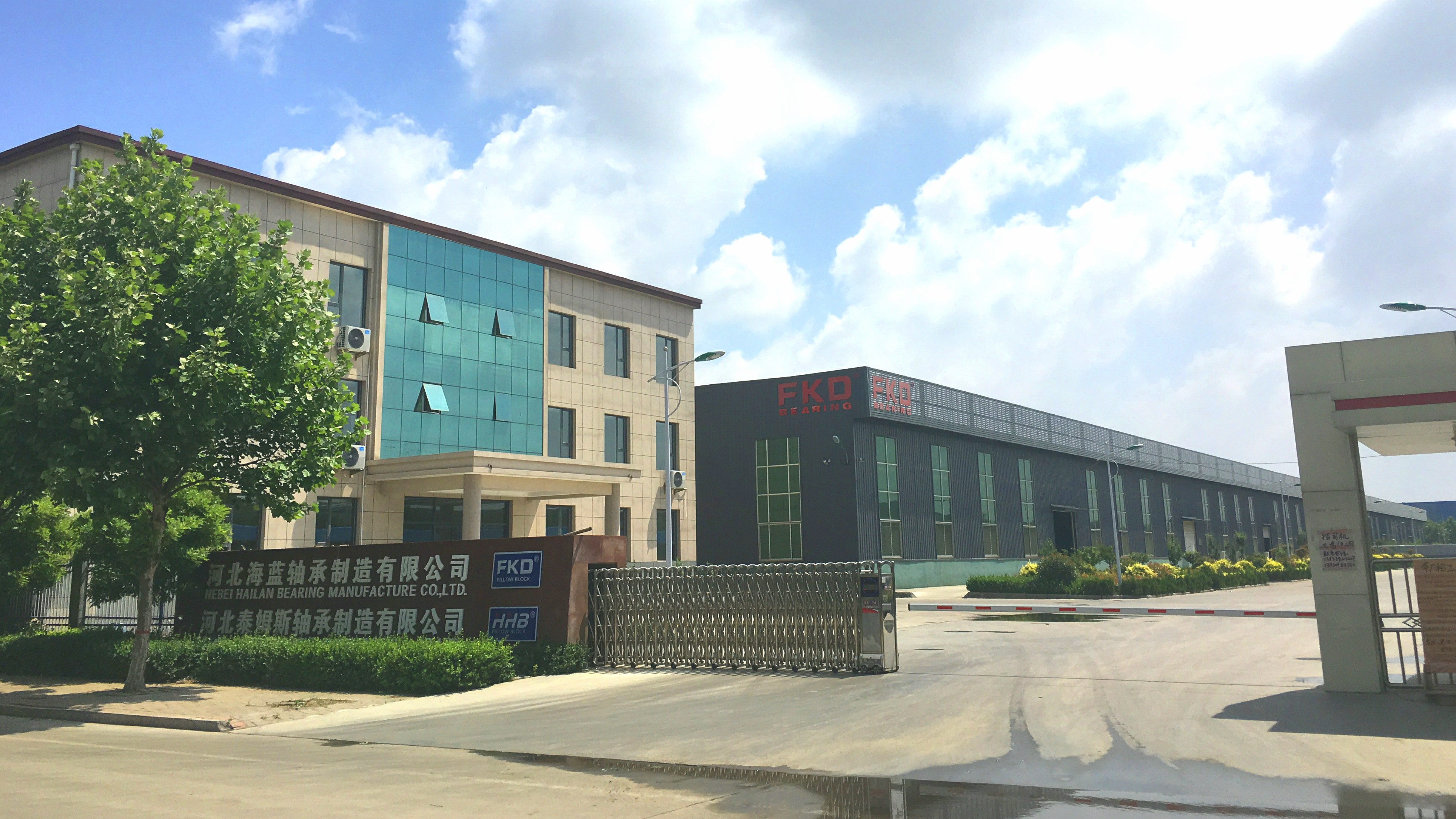 Hebei Hailan Bearing Manufacture Co., Ltd, Linxi County, Hebei: housing casting, automatic production and inspection lines on a 100,000 m² site.
Conclusion
Pillow block bearing selection is a sequencing problem. P5 ZV3 fixes what the insert can do in rotation; 3000 RPM fixes the speed envelope and forces an explicit trade against triple-lip sealing below 500 RPM; center height fixes whether the unit physically fits the machine; and housing material — cast iron or QT450 ductile iron for UCP200, HT200 for SNL508, pressed steel for SAPP/SAPFL/SAPF/SBPFL, STAINSTEEL for SSUCP — fixes how the load reaches the structure and how long the housing lasts.
A quotation that answers all four can be accepted against a drawing. A quotation that answers only the bore size has not yet specified anything, however familiar the series name looks.
Have Questions or Need More Details?
Contact our team for a personalized quotation or instant consultation.
Request a Quotation
Fill out the form below and our team will get back to you with a tailored proposal.
WhatsApp Direct Chat
Prefer to chat in real-time? Message us on WhatsApp for instant assistance & quick answers.
- Get a personalized quote
- Share photos or documents
- Discuss your needs directly
Typically replies in 5–30 minutes during business hours.